
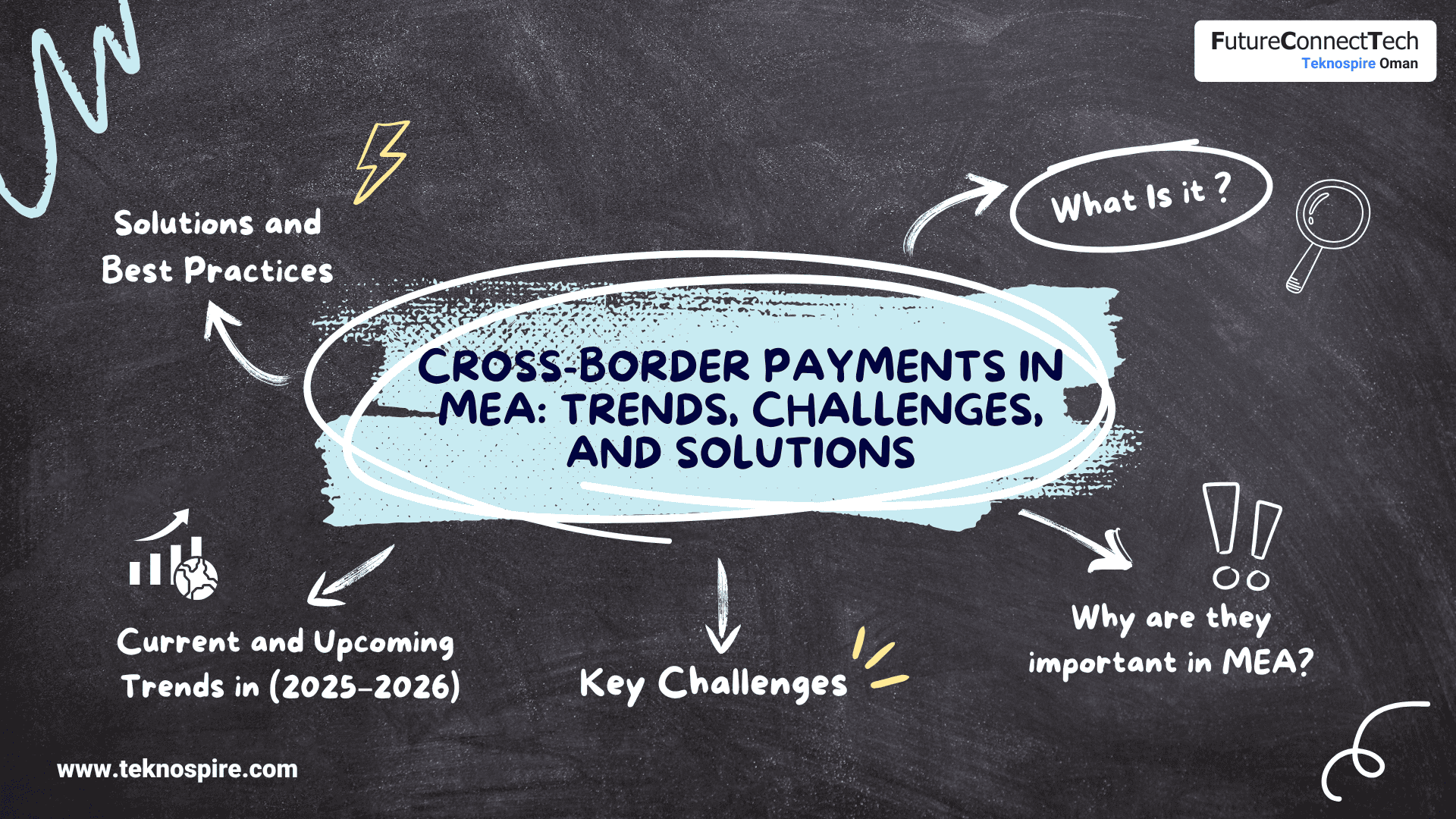
Cross-border payments involve transferring funds between entities in different countries, often via banks or fintech networks. In the Middle East and Africa (MEA), they support trade, remittances, and economic growth.
TL;DR
Cross-border payments in MEA face high costs and regulatory challenges but are advancing with AI, stablecoins, and standards like ISO 20022 for more efficient transactions. Key drivers include remittances and digital adoption.
Table of Contents
What are Cross-Border Payments?
Cross-border payments are financial transfers across national borders, involving currency exchange and compliance. In MEA, they enable remittances, e-commerce, and B2B trade, differing from domestic ones due to longer processing and regulatory checks.
Why are Cross-Border Payments Important in MEA?
In MEA, cross-border payments drive economic integration, trade, and financial inclusion. Remittances to Sub-Saharan Africa exceeded $96.4 billion in 2024, often surpassing official development assistance.
In the Middle East and North Africa (MENA), inflows support key recipients like Egypt and Morocco. Gulf states (UAE and Saudi Arabia) are global remittance hubs, with large expatriate-driven outflows fueling diaspora support and regional trade corridors. These payments align with initiatives like the African Continental Free Trade Area (AfCFTA) and Arab regional platforms, boosting GDP, investment, and inclusion across the diverse MEA landscape.
Sources: https://remitscope.org/africa/ for Africa remittances; World Bank Migration and Development Briefs for MENA trends and growth estimates.
Key Challenges in MEA
MEA encounters regulatory fragmentation, high fees, and delays in cross-border payments.
- High Costs: Average remittance costs to Africa were 8.4% for $200 in Q1 2024. (Source: https://www.tralac.org/blog/article/16753-africa-s-remittance-costs-are-coming-down-but-very-slowly.html)
- Delays: Processing often takes days(2–5 business days) due to legacy systems.
- Regulatory Issues: Varying rules increase compliance burdens.
- Security Risks: Rising cyber threats, including phishing, ransomware, and fraud impacting financial systems.
- Liquidity Problems: Limited access in some markets.
Current and Upcoming Trends in Cross-Border Payments (2025–2026):
As of late 2025, MEA is adopting AI for better efficiency and stablecoins for cost reduction, with global cross-border volumes projected to reach $250 trillion by 2027.
Looking to 2026, trends will focus on deeper integration post-ISO 20022, stablecoin mainstreaming, and AI-driven personalization amid regulatory clarity.
- AI Advancements: Improving fraud detection and transaction speed; in 2026, agentic AI will enable autonomous transaction management and predictive FX optimization.
- Stablecoins: Enabling faster, cheaper remittances; projected market cap of $1 trillion by end-2026.
- ISO 20022 Adoption: Fully implemented for cross-border by November 2025; 2026 will see enhanced structured data benefits, including mandatory address fields for better compliance.
- Digital Platforms: Enhancing interoperability; 2026 consolidation into all-in-one services for payments, treasury, and compliance.
- Real-Time Rails Expansion: Linking instant systems (e.g., BIS Project Nexus go-live in 2026 for ASEAN countries), enabling ~60-second settlements and alias-based remittances.
- All-in-One Consolidation: Unified platforms reducing fragmentation, with greater bank-fintech partnerships for seamless global operations.
Solutions and Best Practices:
Businesses in MEA can improve efficiency through fintech partnerships and compliance with new standards.
- Adopt AI Tools: For fraud prevention and optimization.
- Use Stablecoins: For lower-cost transfers.
- Implement ISO 20022: For better data handling.
- Build Partnerships: With global networks for streamlined processes.
| Solution | Benefit | MEA Example |
| Stablecoins | Speed and cost savings | Remittance corridors |
| AI | Enhanced security | Fraud detection |
Frequently Asked Questions
Who are some common global networks to partner with in MEA?
A: Popular partners include Visa (Visa Direct), Mastercard (Mastercard Move), TerraPay, Thunes, SWIFT gpi, and Banking Circle. Local examples involve M-Pesa partnering with Visa/Alipay and South African banks with Mastercard.
Why are AI tools important for cross-border payments in MEA?
A: MEA transactions often involve diverse currencies, varying regulations, and higher fraud risks. AI helps overcome these by providing real-time insights, reducing manual processes, and enabling faster, more accurate decision-making in complex environments.
What are the main challenges for cross-border payments in MEA?
A: High costs, delays, and regulatory fragmentation.
How is AI transforming cross-border payments in 2026?
A: AI boosts speed, security, and efficiency in transactions.
What is the projected global cross-border payments volume by 2027?
A: $250 trillion.
Are stablecoins a viable solution in MEA?
A: Yes, for faster and cheaper payments, especially remittances.
What is ISO 20022?
A: ISO 20022 is a global standard for electronic data interchange between financial institutions, using XML-based messaging for payments, securities, and trade. It replaces older formats like MT messages, offering more detailed and structured information for various transaction types.
How has ISO 20022 impacted MEA payments in 2025?
A: It standardizes cross-border messaging and improving interoperability.