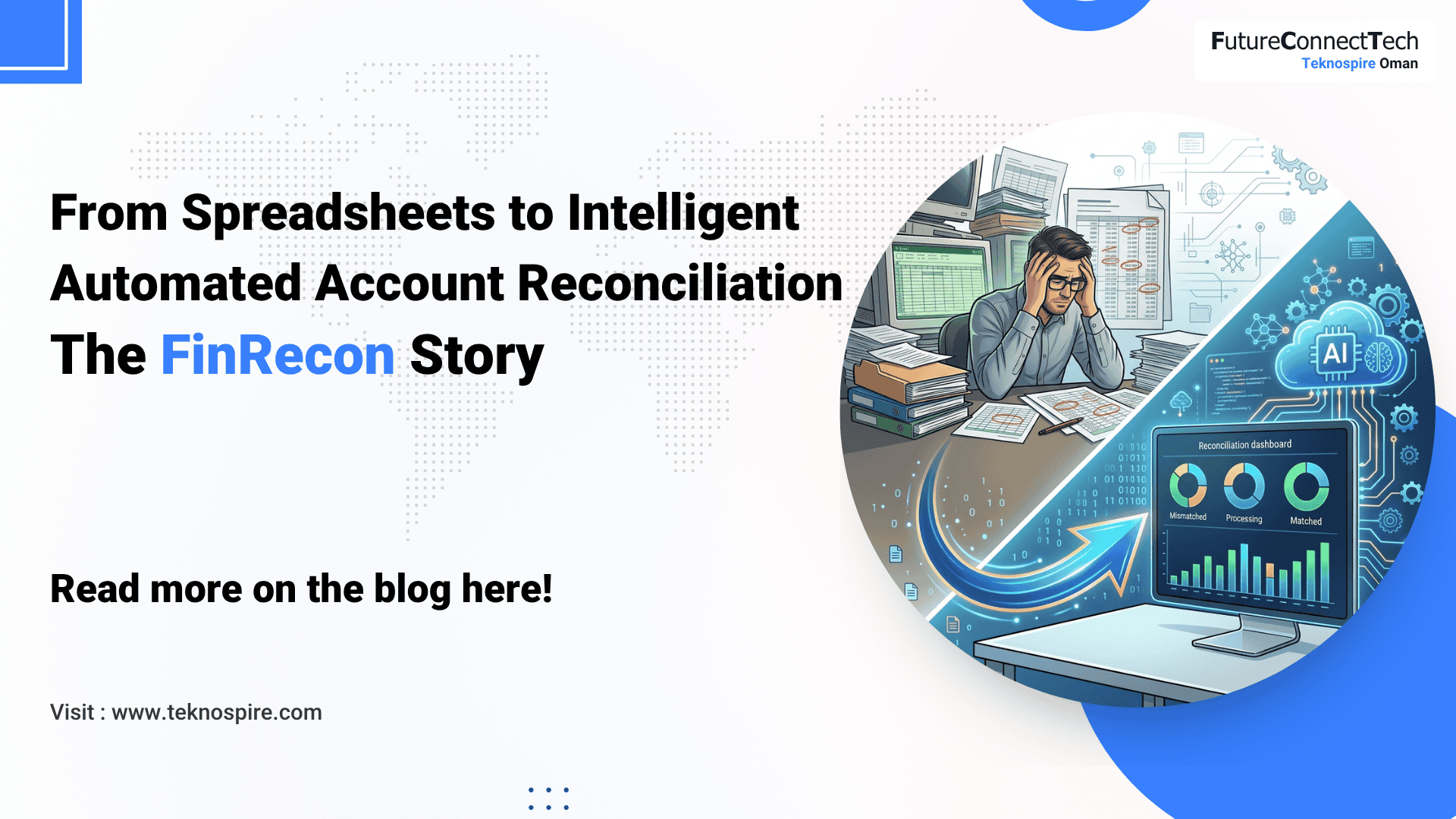
As of 2026, businesses in the GCC are processing billions of transactions annually. Yet inside the finance teams across Saudi Arabia, UAE, Qatar, Kuwait, Oman, and Bahrain manage those volumes through spreadsheets and disintegrated apps that still require manual processes for them to work.
They spend up to 40% of their bandwidth on account reconciliation tasks, such as, data gathering, manual matching, chasing discrepancies over WhatsApp and email, and closing books over days, weeks, and sometimes months.
The Hidden Cost of “Making Do”
The financial and operational drain on teams is now measurable, but the problem goes deeper than just lost hours. As the regional compliance environment tightens, manual systems are simply failing to keep up.
Many businesses have tried “partial fixes,” but these often make the situation worse:
- Version Control Risk: Adding more spreadsheets only leads to conflicting data and human error.
- New Data Silos: Many ERP modules fail to connect directly to bank feeds, creating disconnected islands of information.
- Incomplete Automation: While some tools handle basic matching, they leave the most difficult task—exception management—entirely manual.
- The Scalability Trap: Hiring more people increases your costs, but it doesn’t solve the underlying problem. You are scaling the crisis, not the solution.
This fragmented landscape is exactly why we built FinRecon.
Our Mission When We Built FinRecon
“When we built FinRecon, our thought was that the account reconciliation process should not require a team. The back office was consuming some of the best financial talent in the region. We believe that 98% of reconciliation should run without human intervention and the remaining 2% should be handled faster and smarter than any manual process could manage.”
What FinRecon Does Today: Measuring Capabilities Across Industries
FinRecon is a purpose-built AI-augmented reconciliation platform for the transaction volumes, regulatory requirements, and operational complexity of GCC and MEA enterprises. It automates up to 98% of reconciliations by pulling data from general ledgers, sub-ledgers, bank statements, ERPs, POS systems, payment gateways, and APIs — across every common format including Excel, CSV, PDF, and email attachments.
The platform is not built for one industry. It handles the full spectrum of account reconciliation challenges that GCC businesses face:
- Retail and E-Commerce — Accounts Receivable Reconciliation: Multi-channel payments via cash, cheque, online, and cards are reconciled automatically against sales records and AR ledgers. Partial payments are tracked across multiple events and 98% of accounts are reconciled without manual intervention.
- Procurement and Supply Chain — Accounts Payable Reconciliation: Purchase orders matched against invoices automatically, preventing delayed payouts and ledger mismatches with vendors. Three-way matching across PO, invoice, and receipt is handled simultaneously with discrepancies flagged and routed in real time.
- Banking and Payment Gateways — Settlement Reconciliation: Multi-source financial data consolidated, and merchant settlement reports automated. A Qatar-based payment gateway deployed FinRecon specifically to solve this by significantly reducing manual effort and improving reporting accuracy across all merchant accounts.
- Intercompany and Multi-Entity Reconciliation: Fund transfers between parent companies and subsidiaries are matched automatically. Intercompany positions are reconciled across currencies and geographies without manual intervention.
Across all of these, FinRecon maintains a complete, timestamped audit trail for every transaction with role-based access and view-only permissions for external auditors. Compliance with ZATCA, UAE FTA, and corporate tax requirements is built into the process, not bolted on at year-end.
AI Influence over FinRecon Takes it Further Ahead
Most account reconciliation platforms automate matching. FinRecon goes a mile ahead by embedding intelligence at every stage of the reconciliation process, from data ingestion through to exception resolution and compliance reporting.
- All data formats are ingested: Most financial data in the MEA region exists in unstructured formats scanned PDFs of bank statements, diverse vendor invoices, and regional tax documents in multiple languages.
- Mismatch Explanation: The platform finds a mismatch and understands why it exists. FinRecon retrieves the most relevant historical transaction records and identifies the discrepancy whether it is an FX variance, a partial settlement, or a missing entry.
- Audit Summary: Complex reconciliation findings are automatically translated into clear, business-ready narratives for CFOs to read and act accordingly. Complex discrepancies are categorised and explained automatically.
- Conversational AI Agents: FinRecon’s embedded conversational agents enable natural language interaction across all reconciliation workflows. Thus, finance managers get intelligent, accurate answers in seconds.
Real-World Impact: What FinRecon Has Delivered
Progress is not measured in features. It is measured in what changes for the organisations that deploy the platform.
Riyadh-Based Multi-Sector Conglomerate
A major multi-sector conglomerate in Riyadh was managing over 50,000 monthly transactions across Sarie instant payments and international vendors. Manual reconciliation took 12 days to complete, creating significant visibility gaps in their Saudi Vision 2030 expansion projects.
After deploying FinRecon’s AI stack:
- Month-end close reduced from 12 days to under 48 hours
- 95% extraction accuracy achieved on bilingual Arabic/English invoices
- $250,000 in unrecovered bank fees identified in the first month surfaced by the conversational AI agent through natural language queries about hidden variances
Qatar-Based Payment Gateway
A Qatar-based payment gateway deployed FinRecon to consolidate multi-source financial data and automate merchant settlement reports. It replaced a manual process that was creating reporting delays and accuracy gaps across all merchant accounts.
Where FinRecon Goes Next
This year and onwards, FinRecon will be recognised as a SaaS model with a self-signup journey, allowing you to start reconciling with minimal human intervention.
FinRecon: The Smarter Way to Reconcile Your Accounts
Account reconciliation is a process that runs in the background while finance teams focus on the work to take the business ahead. The automated reconciliation platform makes this possible.
By replacing the entire manual cycle with an AI-first engine that matches, flags, explains, and reports automatically, continuously, and accurately enough that your auditors stop asking questions.
FinRecon was built for the scale, complexity, and compliance pressure that defines doing business in the GCC and MEA today. It’s high time to free your team from piles of spreadsheets, manual data entry and reconciliation, and to enable them to indulge in strategic planning and growth.
Frequently Asked Questions
What is account reconciliation?
It is the process of comparing two sets of records such as a bank statement and a general ledger to ensure the figures agree and are accurate.
Why is account reconciliation important?
It is critical for detecting fraud, identifying bank errors, ensuring tax compliance, and maintaining the overall financial integrity of a business.
What are the types of account reconciliation?
Common types include bank, vendor (accounts payable), customer (accounts receivable), intercompany, and inventory reconciliation.
What is the account reconciliation process?
The process involves gathering data, matching transactions, identifying discrepancies, adjusting records, and finalizing a verified report.
How often should account reconciliation be done?
While many businesses reconcile monthly, high-volume GCC enterprises are increasingly moving toward daily or real-time reconciliation to maintain constant visibility.
What are common challenges in account reconciliation?
Major hurdles include manual data entry errors, unstructured data formats (like PDFs), high transaction volumes, and complex multi-currency settlements.