Financial Inclusion

Best Performing Blogs 2025
Financial Inclusion

Best Performing Blogs in 2025

2025 was a year of strong conversations around finance, treasury, and digital transformation.From practical reconciliation challenges to forward-looking fintech insights, these blogs stood out for one simple reason—they delivered real value. Here’s a look at the content our audience read, shared, and engaged with the most this year. Oman Fintech Solutions: How Teknospire’s FCT Is Transforming Digital Finance Across the GCC India-based fintech Teknospire is a leading provider of innovative products and solutions. With technological advancement, it continues to serve multiple… Read More 31/01/2025 Automated Reconciliation for Enhanced Accuracy and Efficiency Are you spending countless hours reconciling financial data across spreadsheets and files? The struggle with inaccurate financial records is tedious… Read More 30/10/2024 5 Steps to Streamline Inventory Reconciliation with FinRecon Maintaining accurate inventory records is crucial for the success of any business. It often happens that the inventory counts in… Read More 09/01/2025 How does Reconciliation Platform Revolutionize & Reshape Industries? Are you familiar with automating your account reconciliation processes? Yes, you heard that right. Organizations nowadays deal with huge volumes… Read More 15/11/2024 The Evolving Landscape of Treasury/Cash Management System Effective Treasury management Software is crucial for businesses of all sizes, helping them optimize liquidity, reduce financial risks, and streamline… Read More 02/04/2025 These top-performing blogs reflect what matters most to today’s finance and fintech teams: clarity, efficiency, and smarter decision-making. As we move into the next year, we’ll continue creating content that solves real problems and sparks meaningful conversations. Stay tuned for more insights that help you stay ahead.

Cross-Border Payments in MEA
Financial Inclusion, FinNews

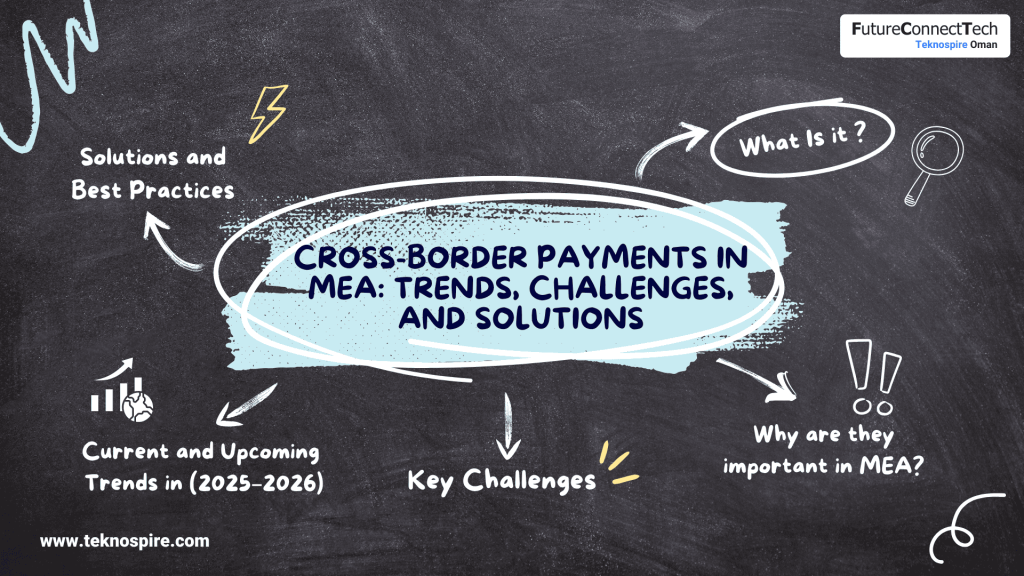
Cross-Border Payments in MEA: Trends, Challenges, and Solutions for 2025-2026 

Cross-border payments involve transferring funds between entities in different countries, often via banks or fintech networks. In the Middle East and Africa (MEA), they support trade, remittances, and economic growth.  TL;DR Cross-border payments in MEA face high costs and regulatory challenges but are advancing with AI, stablecoins, and standards like ISO 20022 for more efficient transactions. Key drivers include remittances and digital adoption.  What are Cross-Border Payments? Cross-border payments are financial transfers across national borders, involving currency exchange and compliance. In MEA, they enable remittances, e-commerce, and B2B trade, differing from domestic ones due to longer processing and regulatory checks. Why are Cross-Border Payments Important in MEA? In MEA, cross-border payments drive economic integration, trade, and financial inclusion. Remittances to Sub-Saharan Africa exceeded $96.4 billion in 2024, often surpassing official development assistance. In the Middle East and North Africa (MENA), inflows support key recipients like Egypt and Morocco. Gulf states (UAE and Saudi Arabia) are global remittance hubs, with large expatriate-driven outflows fueling diaspora support and regional trade corridors. These payments align with initiatives like the African Continental Free Trade Area (AfCFTA) and Arab regional platforms, boosting GDP, investment, and inclusion across the diverse MEA landscape. Sources: https://remitscope.org/africa/ for Africa remittances; World Bank Migration and Development Briefs for MENA trends and growth estimates.  Key Challenges in MEA MEA encounters regulatory fragmentation, high fees, and delays in cross-border payments. Current and Upcoming Trends in Cross-Border Payments (2025–2026): As of late 2025, MEA is adopting AI for better efficiency and stablecoins for cost reduction, with global cross-border volumes projected to reach $250 trillion by 2027. Looking to 2026, trends will focus on deeper integration post-ISO 20022, stablecoin mainstreaming, and AI-driven personalization amid regulatory clarity. Solutions and Best Practices: Businesses in MEA can improve efficiency through fintech partnerships and compliance with new standards.  Solution Benefit MEA Example Stablecoins Speed and cost savings Remittance corridors AI Enhanced security Fraud detection Frequently Asked Questions

MENA payment integration failures
Financial Inclusion, FinNews

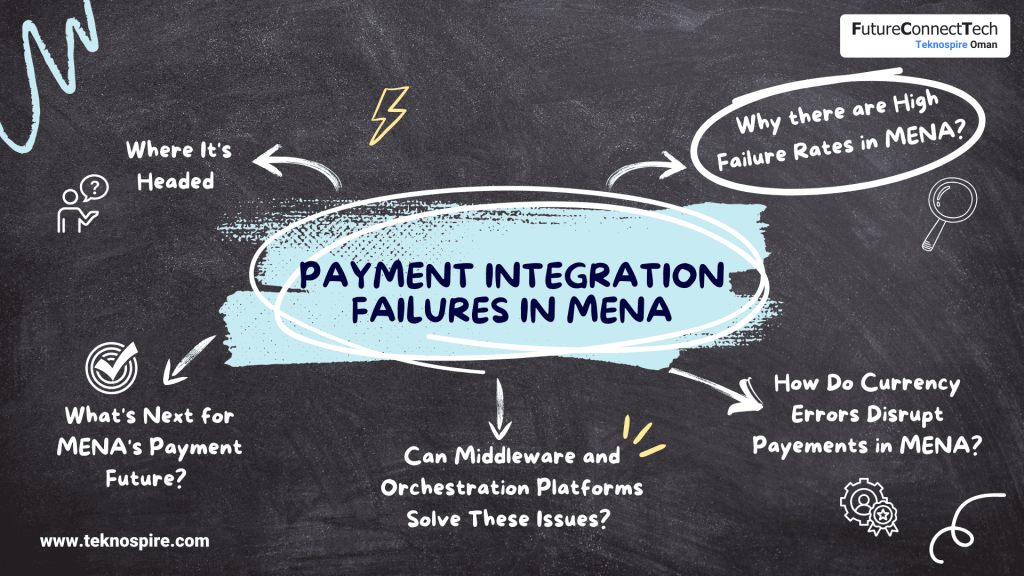
Payment Integration Failures in MENA: Currency and AML Issues Driving High Failure Rates – and How Middleware Can Help? 

What if a significant portion of your payment integrations failed due to technical glitches in currency handling or AML compliance? In the fast-growing MENA fintech landscape, these challenges cause many projects to require major rework, delays, or even abandonment – with industry reports indicating rates around 60% in emerging markets.  As real-time payments in the region approach $1 trillion in transaction value by 2028, these issues translate into lost revenue, higher costs, and missed opportunities. The good news? Modern middleware and payment orchestration platforms help businesses overcome these hurdles efficiently.  Let’s explore the main pain points and practical solutions. Why Are Payment Integrations Facing High Failure Rates in MENA? Complex currency environments and stringent AML requirements often clash with legacy systems, leading to integration of bottlenecks.  The outcome? Integration projects frequently face significant delays and budget overruns of 30-50%, while SMEs in markets like Saudi Arabia experience B2B payment delays exceeding 60 days in 35% of cases. Consumer trust also suffers, with many citing fraud concerns as a barrier to digital payments.  How Do Currency Errors Disrupt MENA Payments?  Quick fact: Fluctuating rates and suboptimal conversion logic can reject legitimate transactions, particularly in GCC-Europe corridors where unchecked fees add friction. Common issues include: Even modest failure rates can lead to substantial revenue loss in high-volume e-commerce environments. What AML Challenges Are Hitting MENA Fintechs Hardest? Traditional systems often produce false positive rates of 90-95%, overwhelming compliance teams and creating operational bottlenecks. Regulators such as Saudi Arabia’s SAMA and the UAE Central Bank are enforcing stricter standards, with penalties and license actions on the rise. Key pain points:  Addressing these not only avoids fines but also builds customer confidence. Can Middleware and Orchestration Platforms Solve These Issues?  Yes – effectively and quickly. Middleware acts as an intelligent layer that dynamically routes transactions, applies localized rules, and embeds compliance checks without requiring full system overhauls. Platforms like MoneyHash, Primer, and Apaya enable smart fallbacks (e.g., switching from card to wallet) that can recover up to 20% of otherwise declined payments. How it helps:  1. For Currency Handling  2. For AML Compliance Real-world impact: Leading BNPL provider Tamara has significantly improved conversion rates and processing efficiency using orchestration tools.  Challenge  Middleware Fix  Expected Impact  Currency Conversion Errors  Dynamic routing & hedging  20% fewer declines  AML False Positives  AI monitoring  90% alert reduction  Integration Delays  API decoupling  30-50% cost savings  Cross-Border Friction  Geo-specific rules  15% conversion lift  What’s Next for MENA’s Payment Future?  MENA remains one of the world’s fastest-growing fintech regions, with projected annual revenue growth of around 35% through 2028 and e-commerce expected to reach approximately $50 billion by the same period. To capitalize on this growth, businesses should: Note: The figures mentioned in the above article are derived from multiple industry reports and discussions like SPAYZ.io, McKinsey, Stripe & Edgar, Dunn & Company Report, KPMG MENA Fintech Report. FAQ: Quick Answers on MENA Payment Integrations  Have questions about your payment stack? Share them in the comments below. Visit Teknospire for more insights on MENA fintech trends.

Escrow Account
Escrow, Financial Inclusion

Understanding Escrow Account – How it works? Uses & Benefits

In every high-value transaction, risk is inherent, whether it is an acquisition, a cross-border payment, a real estate development funding or securing a large software license agreement. In a real estate scenario, the buyer/payer needs absolute proof that the service or asset will be delivered before releasing payment. The Seller/Developer needs guaranteed assurance that they will be paid once they meet their contractual obligations. This systemic conflict of trust slows down deal closure, compromises cash flow certainty, and leaves both parties exposed to the significant risk of financial fraud or non-performance. Businesses face tangible losses and operational roadblocks due to this trust deficit: Introducing FinEscrow: The Digital Advantage for Real Estate and Banks For industries like Real Estate Development, where regulation and payment governance are mandatory, a slow, manual escrow process is no longer acceptable. This is where FinEscrow steps in. FinEscrow is an automated digital escrow platform designed to bring speed, transparency, and bank-regulated control to high-value payments for developers and banks managing project finances. The FinEscrow Promise: Compliance and Speed FinEscrow integrates directly with the existing financial systems to offer a fully scalable, secure solution that prioritises: The foundational solution to the trust deficit is the Escrow Account. An escrow account is a temporary, third-party holding account that holds funds or assets until all contractual obligations are met. It acts as a neutral safeguard, ensuring that funds are released only when predefined conditions agreed to by both parties to the transaction are fully satisfied. It’s the ultimate mechanism for building trust and ensuring transactional security. Key Uses of Escrow Accounts Beyond real estate escrow, these services are essential across virtually every industry handling large, milestone-based payments: Strategic Benefits of Escrow Account Services Implementing professional escrow services offers tangible benefits that extend far beyond simply holding money: For sellers, the certainty of payment improves liquidity forecasting. For buyers, capital remains protected until value is delivered, which is essential for optimising working capital cycles and preventing premature spending. FinEscrow: The Right Platform for Real Estate and Banks While traditional banking models offer escrow, they are often slow, manual, and expensive, relying on paper contracts and delayed verification. This is why a specialised solution like FinEscrow is transforming the service, particularly for the demanding and regulated requirements of the real estate sector: Secure Future Transactions with Escrow Account Services The core trust conflict is solved not just by the concept of escrow, but by the efficiency and transparency of its execution. Manual escrow is a necessary safeguard; automated escrow via FinEscrow is a competitive advantage. For Real Estate Developers navigating complex regulatory requirements and for all high-growth businesses seeking certainty, FinEscrow replaces delays, ambiguity, and legal exposure with a predictable, transparent, and scalable system. Stop letting manual processes dictate the pace of your deals today. Are you ready to transform transactional security from a high-risk operational burden into a strategic asset? Contact us for a personalised demo of the FinEscrow platform and begin your journey to digital trust today. Frequently Asked Questions:

Escrow Account
Escrow

The Role of Escrow Account in High-Value Transactions

High-value transactions are inherently risky. The stakes are immense, and the potential for fraud, non-performance, or simple disputes can derail months of negotiation. From large-scale mergers and acquisitions to significant real estate purchases, the buyer commits large sums of capital, and the seller commits to delivery; a system is required to guarantee fairness. This creates the need for a secure, temporary holding vault for funds or assets managed by a neutral third party. All that is required is streamlining complex dealings and automating payment processes. What about an escrow account? Yes. An escrow account protects all parties involved in a transaction, reduces the risk of fraud, and provides a clear, transparent, and auditable transactional record. Escrow accounts are utilised across various industries, including real estate, digital lending, e-commerce, and digital marketplaces. Basic Functionality of an Escrow Account An escrow account functions as a neutral guardian for the transaction. It is temporary, maintained by a third party, and holds the money or funds until predefined conditions are met between the parties involved in the transaction. Let’s understand the fundamental principles of an escrow account: Understanding the Application of Real Estate Escrow The need for escrow accounts is most acute in sectors like real estate, where transactions involve huge capital over extended periods, creating opportunities for non-performance or misuse of buyer funds by developers. In the real estate context, the escrow account associated with a specific project serves as the bank-regulated destination for the buyer’s money. The developer sets certain milestones in the project specifications as the work proceeds. The buyer’s money flows to the escrow account, and funds are only disbursed to the developer’s account depending upon the milestones achieved and approved by the authorized bank checker. This system provides security for the buyer and gives the bank a clear, auditable view of the project’s financial flow, ensuring compliance with Central Bank guidelines. Benefits Derived by Stakeholders All parties involved in high-value transactions take shelter in escrow accounts for better safety and security. Each of them seeks to derive benefits, such as: Role of Modern Escrow Management Platforms Recognising the limitations of traditional, paper-heavy escrow processes, the industry is transitioning toward digital management solutions. Modern escrow platforms are upgraded to deliver the precision, integrity, and compliance demanded by today’s complex, high-value deals. These cutting-edge platforms, such as FinEscrow, are tailored to the unique needs of banks and real estate developers, particularly in regions with complex regulatory landscapes like the Middle East. To make it simpler, here is the workflow and features of FinEscrow to protect the interests of all parties involved: Secure the Deal for High-Value Transactions with FinEscrow Escrow accounts secure financial dealings. It shields all parties from financial risk, ensuring fairness and upholding confidence in every transaction. Automated and digitised escrow platforms automate processes, accelerate transaction cycles, and bolster financial governance. This, in turn, allows banks and real estate developers to achieve unparalleled precision and integrity. They transform the high-risk liability of capital expenditure into the certainty of predictable cash flow and audit-ready governance. FinEscrow is built for this future where project finances are always secure, compliant, and optimised. If you are planning to achieve complete financial certainty for your next high-value project, talk to our platform experts for a detailed session! Frequently Asked Questions

Escrow Account - Real Estate
Escrow

Why does Real Estate need Escrow Account Services?

Let’s imagine a real estate ecosystem where funds are never lost, milestones are never disputed, and every party involved – buyers, developers, and banks—operates with complete confidence and trust. Every stakeholder here has more assurance and fewer agreements running across.  However, in reality, secured and structured financial workflows are still a nightmare. Misplaced funds, disputes, and manual follow-ups across all parties are a major concern. So, how do we make this smooth system possible with modern escrow account services? The real estate industry is undergoing a digital transformation with high stakes and regulations. Holding funds, automating fund release, setting up milestones and gaining more financial visibility can now be made a reality with FinEscrow. As a comprehensive escrow management solution, the platform is specifically designed to provide unparalleled service to banks and real estate developers. This implies that banks or entities using FinEscrow would manage the accounts with the platform’s support for navigating complex projects and regulatory landscapes. Escrow Management Services in Real Estate Escrow management platforms like FinEscrow automate processes, streamline documentation, and have country-specific API-based real-time integration and regulatory compliance. It enables better decision-making by providing insights for resource allocation and financial planning.  There are high-risk environments involving large sums of money, long timelines, and multiple stakeholders. Real estate developers always look up to FinEscrow as a strategic partner to transform transactions with unparalleled precision and integrity. On the other hand, buyers are often concerned about timely delivery and financial accountability. However, issues frequently arise when either party, buyer or developer, fails to adhere to the agreed terms. In many cases, buyers’ funds are misused or diverted to other projects, leading to disputes, delays, and loss of trust. All of these have created a need for escrow account services in risk mitigation, streamlining operations, enhancing customer trust and helping meet financial requirements. Challenges in Real Estate Transactions Given the context, let’s run through the everyday challenges faced by the stakeholders involved in real estate transactions: These struggles aim to transition from a traditional to a modern approach by leveraging automated escrow services provided by solutions like FinEscrow. Understanding the Functionality of Escrow Accounts An escrow deal/agreement is a three-way contract between the buyer, seller, and a third-party agent. It details exactly when funds will be released, the amount involved, and the roles and fees for each party. Let’s now understand how real estate escrow works: This ensures that no money changes hands prematurely and that every party fulfils their obligations. Why is an Escrow Account Critical in Real Estate? As an escrow management platform, FinEscrow plays a critical role in the real estate industry by providing: FinEscrow Features: Bringing in Transformation FinEscrow offers unmatched control and clarity to banks processing thousands of real estate transactions and developers handling multiple projects with a set of absolute outstanding features: Benefits Derived by all Stakeholders  All parties involved in the real estate transaction derive multiple benefits from the escrow management platform, such as: Escrow Services are an Essential: Choose the Right Platform In an industry where high-stakes transactions are the norm, manual and outdated processes are no longer an option. The challenges of fraud, disputes, and lack of transparency have made modern escrow account services a fundamental requirement for the real estate industry. By choosing a robust platform like FinEscrow, all parties can move beyond the anxieties of misplaced funds and legal disputes. A modern escrow platform is a strategic necessity that protects every party, builds trust, and accelerates growth. Why wait to partner with FinEscrow? Just drop a mail and get a demo delivered to explore more about our platform. Choose FinEscrow to stay confident and assured of seamless transactions. Frequently Asked Questions

FinEscrow - Escrow Account roles & functionalities
Financial Inclusion, Escrow

Escrow Account: Understanding Roles & Functionalities

An escrow account behaves as a neutral third-party holding money or funds until specific, predefined conditions are met. It serves as a vital safeguard for high-value transactions and diverse financial dealings. This mechanism is crucial for reducing risk and ensuring fairness for all parties involved. FinEscrow is a comprehensive escrow management solution designed to streamline processes, enhance security, and provide unparalleled service to banks and real estate developers. It ensures that all parties involved can trust the management process, reducing potential disputes and enhancing confidence in transactions. Escrow Account: A Neutral Guardian An escrow account functions as a neutral guardian for funds or money. These are released only upon the complete fulfilment of agreed-upon conditions. This conditional release is fundamental, as it protects both buyers and sellers from potential fraud, non-performance, or disputes, thereby building confidence and fostering trust between transacting parties. Transparency is also a fundamental component, with all transactions and conditions documented to prevent disputes and keep all parties informed throughout the process. FinEscrow is developed on cutting-edge technology and is a reliable solution for managing escrow accounts specifically tailored for the real estate sector. The platform enhances cash flow management by ensuring timely disbursements, allowing for more efficient financial planning and resource allocation. Key Functionalities: How Escrow Accounts Work? The operational backbone of an escrow arrangement lies in the escrow agreement—a tripartite contract involving the buyer, seller, and the escrow agent. This agreement meticulously outlines the conditions for the release of funds, the amount involved, the responsibilities of each party, and associated fees. For FinEscrow, this process is automated to enhance efficiency and ensure that all parties involved have quick access to necessary documentation, resulting in faster approval procedures. Let’s now learn how escrow accounts work: Using Escrow Accounts for Enhanced Security & Efficiency Modern escrow management solutions address the complexities of the traditional escrow process, ensuring that all necessary transactions are handled securely and efficiently, thereby improving trust and reliability. Let’s unveil the essential features of FinEscrow for Banks and Developers: The platform is equipped with critical functionalities that cater to both financial institutions and property developers. Advantages of using FinEscrow Why and Who Needs an Escrow Account? Concerning FinEscrow, Banks, Financial Institutions, Real Estate Developers, and Buyers need an escrow account for: Furthermore, escrow accounts are utilised in various industries, including digital lending, e-commerce, digital marketplaces, online gaming, and more. FinEscrow: Building a Future of Secure & Streamlined Transactions Escrow accounts stand as indispensable pillars of secure financial dealings. They are the essential mechanism that shields all parties from risk, ensuring fairness and upholding confidence in every transaction. FinEscrow elevates this critical safeguard, transforming the complexities of traditional escrow into a seamless, efficient, and highly secure digital experience. FinEscrow not only minimises administrative burdens but also accelerates transaction cycles and bolsters financial governance. Whether you are a bank seeking to expand revenue streams and enhance customer trust, or a real estate developer aiming for optimal cash flow and increased buyer confidence, FinEscrow is your strategic partner. Visit https://teknospire.com/ to learn more. Frequently Asked Questions

Escrow Account
Financial Inclusion, Escrow

What is An Escrow Account and What is the Purpose of It?

An escrow account is a temporary, secure account maintained by a bank that holds money and funds as a neutral third party until specific conditions are met by the parties involved in the transaction. It protects both parties involved, reducing the risk of fraud and providing a clear, transparent and auditable transactional record. Escrow accounts are utilised in various industries, including real estate, digital lending, e-commerce, digital marketplaces, online gaming, and more. This streamlines transactions and automates the payment and compliance process. They minimise the chances of scams or non-payment between the parties, avoid disputes, and build trust. To help banks and real estate developers in the Middle East, we have introduced an innovative, comprehensive and tailored Escrow management solution, FinEscrow. It is a cutting-edge solution designed to streamline escrow management processes, enhancing security and improving efficiency for all transactions involved between the parties. Understanding the Escrow Management Process Generally, escrow accounts come into use when there is a high chance that one or both parties involved in a transaction do not stick to their obligations. Let’s make it easier for the readers to understand: Why do we need Escrow Accounts? Concerning FinEscrow, real estate developers are associated with high-risk transactions that involve huge capital. Situations also arise where both parties (buyer and seller of the property) may not adhere to the conditions framed. There are situations where the buyer’s money gets misused by the developer for some purpose other than the concerned project. This is where escrow accounts play a significant role in mitigating the risk. The bank is responsible for creating customer profiles (all real estate developer details), their projects and escrow accounts for each project. All necessary documents must be uploaded and approved by the bank’s concerned person. Every real estate builder and developer now has an escrow account associated with a specific bank. The developer sets certain conditions (milestones) in the project specifications, and upon agreement and approval from the bank’s specific person, the expenses are paid out ot the developer’s vendors. In simple terms, the buyer’s money flows to the same escrow account, and then, depending upon the milestones achieved (the amount of money dependent on work progress and the due date for payment), the money flows out to the developer’s account. The bank gets a clear view of the transactions happening, depending on the milestones set and achieved. Significance of Escrow Management in Real Estate FinEscrow plays a critical role in carrying out escrow management for real estate developers by providing: Advantages of Escrow Accounts The real estate developer submits a fund release request from the escrow account, enclosing details of the milestone. On approval from the authorised bank checker, the money is transferred from the escrow account to the developer’s account. With the advancement of digitisation and state-of-the-art technology, real estate developers can enjoy a range of benefits with escrow accounts. Unveiling Benefits and Features of FinEscrow A reliable solution for managing Escrow accounts, specifically tailored for the real estate sector, ensures that all parties involved can trust the management process, enhancing confidence in transactions. Why FinEscrow is a Compatible Escrow Account for Real Estate Developers With multiple players in the competitive market, developers must select the right solution for escrow management, provided it meets the criteria to reduce risks and scams, enabling smooth and safe transactions. FinEscrow, customized especially for the real estate segment, promises to keep transparency and provide unparalleled services for navigating complex projects and regulatory landscapes. It is an expert in automating processes and streamlining documentation, and comes with country-specific API-based real-time integration and regulatory compliance. It also enables better decision-making by providing insights for resource allocation and financial planning. Real estate developers can always look up to FinEscrow as a strategic partner that transforms transactions with unparalleled precision and integrity. To simplify the complexities of the Escrow process, FinEscrow is a highly recommended platform for its efficiency, accuracy and reliability. Frequently Asked Questions:

Biometric Authentication
Financial Inclusion, Finance, FinNews, FinTech

Biometric Authentication: Enhancing Security in Fintech

In today’s fast-paced world, digital financial services are exploding from mobile banking to AI-powered investment platforms. But with convenience comes risk: fraud, data breaches, account takeovers. That’s where biometric authentication steps in granting access based on your unique physical traits, offering fintech a powerful line of defense. Why Biometrics Matter in Fintech Types of Biometric Technologies & How They Work a. Fingerprint Scanning  Arguably the most common. Users touch or swipe their finger on a sensor; the system compares the print to stored encrypted data.  b. Facial Recognition  Leveraging front cameras or infrared sensors to map face geometry. More secure versions use “liveness detection” to prevent spoofing with photos.  c. Voice Recognition  Analyzes tone and pitch used for customer‑service phone lines or voice‑activated transactions.  d. Iris & Retina Scans  Highly accurate (pattern of eye), though less common due to cost and infrastructure needs. Found in high‑security banking apps or physical branches.  Real World Use Cases in Fintech Benefits & Business Impact: Benefit  Impact  Enhanced security  Reduces fraud; biometric is nearly impossible to replicate.  Better user experience  No PINs/passwords, just a quick touch or glance. Fast & frictionless.  Regulatory compliance  Meets standards like PSD2, KYC/AML making onboarding smoother.  Competitive edge  Fintechs using biometrics appear innovative, trustworthy, modern.  Challenges & Considerations: The Road Ahead: Trends & Outlook Conclusion Biometric authentication isn’t just a shiny innovation – it’s fast becoming a core infrastructure for secure, user-friendly fintech services. With carefully designed privacy, anti‑spoofing, and accessibility measures, it offers stronger security for companies, and smoother experiences for customers. 

Treasury Management System
Treasury Management, Financial Inclusion, FinTech

Treasury Management: Simplifying Conglomerate Multi-Entity Cash

For CFOs and Group CFOs leading large enterprises and conglomerates, the vast networks of entities, divisions, and global offices they manage involve huge capital. This complex business structure entails cash dispersed across multiple bank accounts with various financial institutions. Idle cash can often be found across departments and subsidiaries, preventing a holistic view of the cash position and hindering decision-making for future planning and investment. This fragmentation creates blind spots, leading to missed opportunities for high-return investments, suboptimal resource allocation, and a diminished ability to react swiftly to market shifts. Ultimately, this compromises a conglomerate’s financial agility and competitive edge. Maintaining peak liquidity performance, optimizing capital deployment, mitigating operational risks, and ensuring compliance with diverse regulations is still a daydream for many conglomerates. Leaders of such entities face these troubles and often experiment with solutions that promise to solve yet fail to meet their objectives.  A treasury management system/ Treasury Single Account (TSA) consolidates all cash and financial transactions into one centralized account. It enables organizations to operate through a single bank account to optimize liquidity, improve visibility, and streamline financial operations. In this guide, we will unveil the hurdles of cash management, look for an optimal solution, and understand the workings and benefits of adopting a Treasury Single Account.  Why is Conglomerate Cash Management So Difficult? Conglomerates manage multiple accounts across different subsidiaries, divisions, or geographical regions that lead to: Why Do Conglomerates Look for a Unified Solution? Finance departments in every conglomerate have recognised the inefficiency of outdated, decentralized treasury practices. Accepting fragmented visibility, inefficient capital deployment, and heightened risk is no longer preferred. Manual methods are cumbersome, with hours wasted by team resources on bringing together all scattered financial data. A Single Account Treasury Management (SATM) approach has become necessary for all conglomerates to centralize control and bring in strategic financial management. It simplifies tracking and monitoring of funds, ensuring real-time visibility into the cash position. Treasury management tracks and monitors funds, reducing the complexity and time required for bank reconciliation processes. FinStream: Single Account Treasury Is Your Go-To Solution Now Finance departments can now easily tackle the complexities of multi-entity cash by utilising FinStream’s treasury management to the fullest through: Key Advantages of FinStream for Conglomerates Adopting FinStream’s STA comes with a bundle of benefits for conglomerates, such as: Master Your Cash, Master Your Future with FinStream’s STA Is your conglomerate still battling the chaos of fragmented cash? Are scattered funds hindering your strategic agility and eroding your bottom line? Single Account Treasury Management is ideal for organizations looking to simplify treasury operations, optimize liquidity, and enhance financial control. STA solution helps consolidate cash flows by ensuring all cash inflows and outflows through a single account. FinStream’s Treasury Single Account is an expert in reducing manual processes, freeing resources, lowering operational costs and helping finance departments of conglomerates simplify and streamline workflows. It empowers CFOs, Finance Controllers, and Treasury Banking Heads with real-time, consolidated insights, enabling them to convert idle funds into strategic capital and navigate market shifts with unparalleled confidence. It’s time for you not to just manage your conglomerate’s cash, but master it. Book a personalized demo with our FinStream experts today. Start your journey to intelligent treasury management now. Frequently Asked Questions

Scroll to Top