Digital Banking

Open Banking
Digital Banking, Financial Inclusion, FinTech Trends, Open Banking, Open Banking API

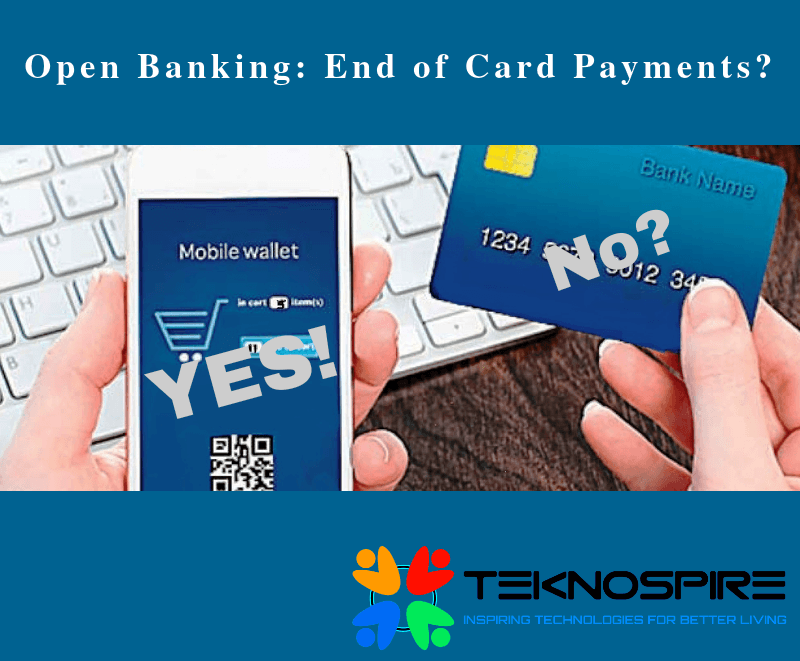
Open Banking: End of Card Payments?

Any new technology or innovation always opens up the debate about the relevance of such models in the first place. When it comes to the Open Banking APIs (Application Programming Interfaces), the newest offering of FinTech, there are ongoing discussions on how it can bring about a revolutionary banking experience which is beneficial to the end users. The basic idea behind all these innovations remain to offer a better experience to consumers and leverage the choice of integrated systems that are widely available today. However, one of the most intriguing questions around the Open Banking model is about the potential it holds to change the payment ecosystem entirely. How Open Banking works? Taking one of its many applications, to provide assistance to you, so that you get the best of the deals available and can manage your finances efficiently, Open Banking will enable companies to give more accurate personal financial guidance, tailored to your particular circumstances and delivered securely and confidentially. To provide tailored advice, companies need to know how you use your account. At the moment, to get personal financial guidance, you have to hand over your confidential banking information to price comparison websites. Open Banking will use APIs (Application Programming Interfaces) to share customer information securely. Companies will be able to use open banking APIs to see your transaction information to tell you what you might save when considering the current account best suited to you. Or if you run a small business you could find the best deals for your business accounts and loans. No in-betweens, no interruptions, just pure and simple direct customer-to-service relations. Open Banking: End of Card Payments in Future? That’s certainly a possibility! Fundamentally, Open Banking is a concept that is all about the free flow of data. It allows third-party service providers to access financial information of the customers securely (with their consent) and in real time. An excellent example of this could be the banking payment mechanism which requires each transaction to be done manually using the payment cards. However, in an Open Banking platform, the API/app could download consumers’ transaction data directly from their accounts to process payments thus enabling cardless transactions. Although the concept is still in its nascent stage and will take some time to shape up, it will allow the third party organizations to initiate payments between the bank accounts of customers. What will probably happen, as a result, is this: Banks will no longer be required for processing the transactions/ card payments. An authorized third-party organization will be able to make payments on behalf of its customers. Customers won’t have to wait in long queues to make purchases using physical cards at stores. They will be able to easily make payments using digital wallets on their SmartPhones or Smart watches using emerging technologies such as Samsung Pay, Apple Pay, etc. Can Open Banking Change The Entire Payment Ecosystem? To be able to understand this significant shift towards cardless payments powered by Open Banking, it is important to have clarity on the working of the payment cards first. The payment card, essentially, is a token backed with a unique PIN or customer’s signature as authentication, which helps in identifying both the payer and the source to process any payment. Enter Open Banking into the picture! Open Banking replaces the payment card with the actual bank details of the customer without requiring any physical validation. By ensuring a robust authentication system in place (such as phone verification), the model can be easily used to process transactions directly. There are several benefits of saying ‘Bye-Bye’ to the cards and using Open Banking APIs to process payments. Benefits of Using Open Banking APIs for Transactions Over Cards a. Cost Saving This is perhaps one of the primary benefits of using Open Banking APIs to process payments instead of using cards. The open banking model is such that it requires no physical token leading to cost savings for card processors and savings on the infrastructure cost for managing expired/fraudulent cards. b. Ease of Setting Up The ease in setting up Open Banking products as compared to the card payment mode is another reason that makes the possibility of this phenomenal shift stronger. The open banking services are designed thoughtfully to offer solutions collaboratively with payment transfers such as allowing easy linking of the credit cards or bank details of the end-users. c. Convenience Convenience and ease of doing transactions is another attraction of the Open Banking model as a whole. Furthermore, storing bank details of customers is much easier as compared to the cumbersome credit card data, considering security & compliance as essential factors while making payment transactions. Instant purchase history, remote deactivation, and biometrics enabled virtual card provisioning are just a few of the features of cardless payments worth mentioning. Open APIs just make it easier for bank customers to transfer their bank accounts, manage payments, and perform transactions through third parties: both banks and non-banks. The concept creates new opportunities for Service Aggregators to offer better customer service from multiple service providers on a single platform. Does Open Banking Model Translate To the Cardless Payments? If you are still wondering about the Pros of moving to Cardless Payments, here is a list of some of the pros of this new way to pay for your everyday purchases using Open Banking API’s: Convenient as you don’t need your card for making payments and can do transactions without keying in a PIN or signing a receipt. Lessens the threat of hacking where the card might be scanned for stealing valuable information. Cardless payment means no reading of magnetic data strip. The verification token (OTP) is for single use only, making it perfectly safe for ‘Use and Forget’. Convenient and quick payments, which mean no hassle of queues and lining up. Cost and time-efficient without any worrying about remembering multiple cards and account details. Taking Stock of Future Possibilities As rightly said by Kristin Moyer, Vice President of Research and Distinguished Analyst at Gartner and I quote, “Open

open banking
Digital Banking, Financial Inclusion, FinTech, Open Banking, Open Banking API

Open Banking: Who will really get benefitted?

Banking, as a domain, has always been a competitive one. To keep up with the pace of the dynamic nature of this sector, banks & financial institutions are gradually making the shift to experiment with newer technologies, like Open Banking and innovative concepts like FinTech, designed specifically for the banking sector. The basic idea behind all these innovations remain to offer a better experience to consumers and leverage the choice of integrated systems that are widely available today. Are you OPEN to Open Banking? The impact of technology in making our lives better and smoother can’t be overemphasized enough. FinTech (an excellent combination of finance and technology!) is one such area making the traditional banking system seem redundant with each passing day. The rise of Fintech sector has been exponential in the last few years with Fintech adoption seeing a sharp rise globally from 16% in 2015 to 33% in 2017 on an average. Open Banking API (Exclusively covered as Open Banking API: A Journey, 1st part of this series of 3) is the newest offering of FinTech that holds immense potential to bring about a transformational banking experience to its end users. However, before making the switch to Open Banking, it is essential to understand what the concept is trying to achieve and who will it really benefit? So What’s the Buzz called ‘Open Banking’ All About? With Open Banking, banks are moving to Agile technologies, building strong partner networks, and creating robust mobile platforms which cater to consumer’s needs, thus enabling direct financial transactions between customers and businesses and making cross-platform payments a reality. It works as a systematically designed collaborative model. Here the customer’s banking and other financial information/data is shared to trusted third parties (with the customers’ consent, of course!) through APIs with the aim of offering enhanced capabilities to the users. Thus, Open Banking is a financial services term as part of the financial technology that refers to: The use of Open APIs that enable third-party developers to build applications and services around the financial institution. Greater financial transparency options for account holders ranging from Open Data to private data. The use of Open Source technology to achieve the above. In short, “Open Banking is the possibility of creating new digital business and ecosystems through APIs provided by the banks. This allows customers: To have a greater control over their data Have a better experience in a secure, agile, and future-proof method To generate new revenue streams, and to create a long-term sustainable service model for the industry as a whole. Who will ‘Open Banking’ Really Benefit? The benefits of an Open Banking model aren’t just limited to consumers but extend to service providers as well. It benefits, one and all, associated with it. Benefitting Consumers Among the many benefits of Open Banking to consumers, the most important include:Giving the Benefit of Choice to Customers As a service provider, banks generally offer limited options and the same services to all their customers. Open banking, on the other hand,  gives the benefit of choice to customers as they now have the freedom to select from multiple service providers available. It also empowers customers to take charge of their finances and make informed decisions to manage their accounts. Easing Payments with Smart Devices With Open Banking APIs, customers won’t have to wait in long queues to make purchases using physical wallets at stores. The concept will allow emerging technology applications such as Google Pay, Samsung Pay, Apple Pay, PayTM etc. to make payments using digital wallets using your Smartphone or smartwatch. Ease of Remittance and Currency Exchange Increased number of migrants across the globe for better economic opportunities means an increased amount of money to be sent back to their families. Banks have always found international money transfer and remittances to be a painful and expensive process.Instead of paying a large transfer fee to the ‘money transfer businesses’ or facing the lack of proper setup, especially in rural areas, FinTech companies like NDASENDA, have made this entire process extremely simple, smooth, less expensive, and much faster. Thanks to Open API, the money can be transferred, services can be bought and bills can be paid seamlessly by using one single mobile App at the comfort of your home. Various service providers such as We Swap, World Remit, mPesa etc. are offering ‘currency exchange services’, by using Open Banking, in a very secure and seamless way to transfer even minuscule amounts of money overseas. Customized Product Offerings Open banking holds the potential to offer customized and relevant product & service options to the consumers which most banking apps fail to do. Open banking APIs introduce the concept of service personalization in banking to benefit customers immensely. Customers can now have access to multiple accounts in one place. The customers will be able to enjoy the best deals available with greater transparency. An opportunity is here to see your current financial position in a single application on your Smartphone. It is just a matter of ‘single click’. All the financial data at one place gives the consumer the leverage to take quick credit decisions and avail the best deals possible. Open to better offers by credit providers and instant credit and remittance of the same. With all the accounts linked together by an app and available on a single platform, the consumer is ‘all-powerful’ to make a choice in how to pay. This will also bring in some innovative offers by the banks and the financial institutions to make new customers and retain the old ones. It’s raining Profits! Benefitting Banks and Financial Institutions Collaborative Advantage Open Banking gives an opportunity for banks to stay ahead of the competition by letting them explore data-sharing agreements with fintech and other non-financial service institutions. Allows Banks to Be Futuristic The model allows banks to be futuristic by letting them understand both data privacy mandates that exist as well as the likely changes they need to adapt for a better customer experience. Thus making decision-making foresighted and insightful.

Scroll to Top