FinTech Trends

FinTech, FinTech Trends, Open Banking, Open Banking API

Open Banking API: A Journey

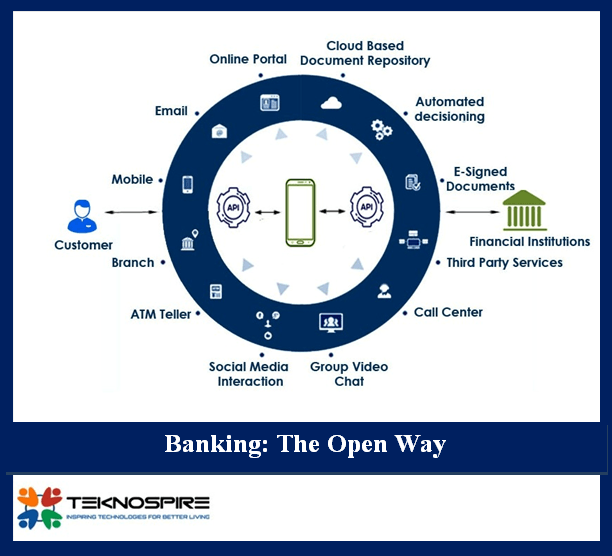
Data sharing and Big Data have become the trending topics in the financial world of late. With the advent of many Fintech start-ups, traditional banks are undergoing a major shift. They, now, are looking forward to modifying the way they operate, to survive the cut-throat competition from their peers. This is when the idea of Open Banking started doing rounds in the banking arena. What Is Open Banking API? In short, it is an Outbound Trade – Stretching beyond the 4 walls of the bank for better services to the customers. The concept relies on connecting computing systems through a common digital language shared among them with the aid of an Application Program Interface (API). Open Banking is a financial services term as part of the financial technology that refers to: The use of Open APIs that enable third-party developers to build applications and services around the financial institution. Greater financial transparency options for account holders ranging from Open Data to private data. The use of open source technology to achieve the above. Thus, “Open Banking is the possibility of creating new digital business and ecosystems through APIs provided by the banks.” This would increase the level of transparency with respect to data accessibility for end customers. It would also help Fintech firms and other third parties to develop and build financial applications. This, in turn, would help banks and other financial institutions to look beyond their businesses and make innovatory advancement in services for the end users. How Did ‘Open Banking’ Concept Take Flight? Open banking was developed based on an idea of Open Innovation coined by Henry Chesbrough who was the head of Open Innovation, Haas School of Business. He came up with the idea that an information or knowledge doesn’t belong to a singular entity and needs to be shared. This concept was later taken up by the banking sector as ‘Open Banking’ to innovate the way they operate and give a holistic banking experience to its customers. Data Sharing – The Journey so Far Until recent times, your financial history was closely guarded and protected by your bank. Your data could only be accessed when you use your debit or credit card for certain transactions through the payment processors. Hence unless you are officially validated, you can’t access an individual’s banking history. However, your banking data still found a way to get to other companies who could use it for their business promotion. How was that even possible, you may ask! Screen Scraping The only way one could get hold of your financial history was through screen scraping.  This was possible by getting your login credentials and using that to access your account for the required data. This was not only unsafe and risky but also highly inconvenient as it gives the said company access to your most confidential information (that could also be misused) and might even lead to frequent blocking of your account (in case of suspicious activity). Hence this needed fixing! The most important part here is the need to control the data that you are willing to share and also the power to revoke it whenever you feel the need to. Open Banking API to the Rescue! To give a control over their data to the customers, banking institutions adopted a newer and updated technology which shared the banking data between the third parties through APIs. This is a sustainable model which is not only reliable but also secure. However, on the flip-side, such advancements may lead to conflicts and need strict governance and policies to control the technicalities associated with such an arrangement. Also, such data sharing systems need high-grade security controls and infrastructural barriers to contain the data privacy. The All-New PSD2 Standards for Data Security! The revised Payment Services Directive or the PSD2 is an upgrade of the existing directive to regulate and control the payment services and service providers in the EU. The main aim for this revision was to minimize conflicts between two or more third parties involved in data sharing and to ensure consumer protection and data privacy. In fact ‘PSD2 + Open Banking and APIs’ is considered as an Engine for Innovation and meaningful change. This directive is said to be of monumental importance in the legacy of data sharing in the retail banking sector. It would control the way the APIs behave and are controlled. They would dictate how third parties connect, share information and the scope of information that can be accessed. By this, the Third Party Providers (TPPs) registered across the participating states can communicate with any bank provided they clear the SCA (Strong Customer Authentication) norms and the data exchange also conforms with the SCA norms. This would mean that every third party involved in data sharing would have to go through diligent scrutiny to verify their authenticity. Open Banking: Inbound trade @ Teknospire Well, it’s not only about the Outbound Trade, Open Banking is also about Inbound Trade. It is also about trading the right products and service features seamlessly from Third Party Partners (TPPs) into their own offerings. Importing the full breadth of these products and features enhances personalized customer experience, build customer loyalty and it also lowers bank’s operational costs. With Open Banking, by adding ‘Banking and Non-Banking’ products and features, banks are able to extend their services beyond the ‘traditional zone’ and broaden their approach beyond financial services to complement further as ‘Complete Customer Banking Journey’. Teknospire, a FinTech Company, has helped multiple banks and financial institutions in multiple countries in Africa (Zimbabwe, Mozambique, Zambia, South-Africa), India, Nepal, and Bangladesh. The core mission and vision are to serve the Bottom 2 billion population, who are not on the digital payments platforms yet. Teknospire enables the banks / financial institutions to build a digital ecosystem with Omni channels interface, along with all possible digital services dispensation at the last mile. The services can be disbursed via B2C interfaces or through the assisted channels (digital touch points/agent network). To be able to digitally evolve the banks
Banking need to be Omnichannel
FinTech Trends

Why do Fintech Start-ups need to be Omnichannel and not Multichannel?

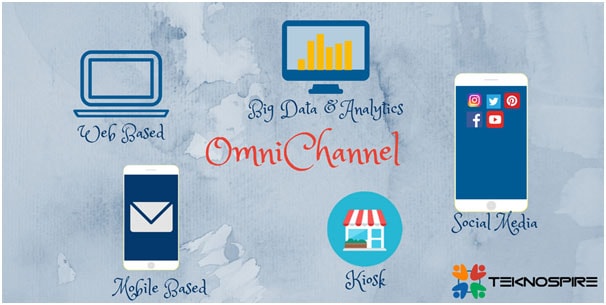
A few years back when we were looking for a Locker facility in our neighborhood, we found the state cooperative bank as the best choice. With the focus on availing only the Locker facility, we never explored the options like internet banking or mobile banking for the bank. Later with demonetization, Aadhaar linking and KYC norm change, we had to visit the branch frequently making it a bit inconvenient. During one of those visits we were informed that they had launched their mobile app banking, provided us with the credentials and play store information. When we installed and started using it, we felt visiting the branch was a better option than struggling with the unfriendly UI design and abrupt error messages. The above scenario is an example of how banking is multichannel but fail to be an omnichannel experience. Is your fintech start-up also committing the same mistake? The Omnichannel Experience As Frost and Sullivan, say – Omni-channel Customer Experience strategy is one of the top business priorities today. Serving the Digital Nomad, the start-ups need to offer connectivity 24*7, reliability, convenience and most importantly consistency across multichannel. Omnichannel Experience allows the client to choose, creating a difference between the want and the need. It lets the customer be the king, and that helps the firm to enrich their database with loyal customers. Courtesy – IBM Why Omnichannel Strategy Helps Fintech? The primary question being “Why should any startup adopt omnichannel strategy”? And the answer might not be straightforward but if you are keen – To give fierce competition to your peers Challenge the legacy systems and processes In Gathering 360-degree customer view To acquire new customer base by offering rich user experience To interact with customers via their preferred mode To offer customized and personalized banking services To launch device independent [Mobile, Laptop, Tablets] solutions To Provide agility and flexibility to your clients Then adopting Omnichannel Strategy is a MUST!   Which Omnichannel Channels are Good for Fintech? If your firm specializes in wallets and Money Transfer, you might need to look for mobile, web, analytics and social media. Else if your start-up is into insurance or insurtech, you might need to realign your strategy that could help in offering on-demand coverage integrated with Analytics, social media, mobile compatibility and in-branch digitization. The thought is to analyze your customer needs and then straighten your omnichannel experience. Here is the list of possible channels that Fintech firms need to look for – Omnichannel Experience for Fintech   How Teknospire Offers Omnichannel Experience to its Clients? We are living in a digital age where multi-channel is not an option; it must be unified. The need of the hour is to provide human interaction with technology. Teknospire with its consistent efforts to deliver last mile banking solutions has tried and tested FinX to make it omnichannel. So be it the Agent who is keen to enter data via his mobile or the customer willing to know the account balance via USSD, we make sure our services are continuous across all access channels. Come and be a part of this revolution… would you? References- Kiosk Icon by – Icon Finder BackBase – Omni-Channel Banking Bank Innovation – Omni Channel Give way to Omni Digital Cloud Lending Inc – Lending Blog Creating OmniChannel Banking Experience Consumers Banking Tech – OmniChannel The New Normal For Retail Banks LinkedIn – Architecture OmniChannel Digital Banking – Yogesh Bhatt Telus International BBVA – Five OmniChannel Strategies Digital Transformation FinExtra – OmniChannelBanking.pdf IBM -Omnichannel_banking.pdf Infosys – omni-channel-banking.pdf

FinTech Trends

FOUR PILLARS OF DIGITAL BANKING

Banks are aware of the fact that they are no longer serving the traditional customer base, they are in dire need to transform their business models and stay relevant in the industry. Here are the four pillars that could help the banks in realigning their business models either with a handshake with fintech firms or revamping themselves. Omnichannel Presence and UX Experience Omnichannel banking not only helps one in smoother transactions but also optimizes customer experience. And if one thinks that Omnichannel is just about providing ‘n’ number of options for clients to interact with the customer, then they are under a wrong impression. Omnichannel is all about seamless and consistent interaction with one’s client. Or as The Economist quotes– “Omnichannel as a strategy that allows customers to shop with smartphones, tablets, laptops and even in stores as if waited upon by a single salesman with an unfailing memory and uncanny intuition about their preferences.” On adopting to Omnichannel strategy, banks would allow anywhere, anytime, any device access with steady experience across channels. Omnichannel also enables interactions across several customer touch points, deriving insights, optimizing and personalizing conversations. Omnichannel presence, when integrated with excellent UX design, is like magic on one’s customers. As per stats, 78% of the time that customers spend on offline banking services is wasted. As most of the UX design lack appeal and usability, many customers are not able to experience pleasant banking digitally. As pointed out by experts there are seven fundamental principles of UX design that need to be included, and they are – Simplicity, Mobile First, Transparency, Aesthetic, Personalization, Self-service,  and Holistic. Social Good Yes, Banks and Banking was evolved to act as an intermediator between the buyer, seller, investor, and investments. But banking could help in addressing the social challenges of the society as well. While to start on ethical banking, the first step is to enable banking for people who lack KYC or do not have branches near to them, or for people who find it hard to pay for banking services that imply enabling Financial Inclusion. Next step is to provide affordable loans at minimal charges to help community members sustain, that means the ability to start their own business, ability to acquire new skills or even execution of entrepreneurial skills. Good Banking could also mean caring for the environment that means usage of mobile wallets, electronic fund transfer, using a renewable source of energy such as the sun, paperless bills and statements KYC, etc. API and Open Banking API’s are the gateway for contextual, innovative solutions. With its expansion it is more comfortable to offer extensive options to clients customizable needs, that may not be an option with legacy organizations. APIS could help banks in pursuing new distribution channels and also in improving the customer’s digital banking experience. Even the product development process could be quick and TTM[Time to Market] could be reduced with modular or API architecture. That means your application could respond to rapid changes, that is the need of the hour. According to the WRBR, 78.3% of banks are counting on APIs to help them improve the customer experience, with fintech firms agreeing. API’s are indeed opening up newer revenue streams for the banks and fintech. Data Power Data and analytics are enabling banks and fintech firms to understand customers better, identify business opportunities and reduce costs. With Analytics on board, the financial institutions could anticipate on the loan defaults or pinpoint the consumers who are taking advantage of overzealous discounting and restructure the price of the products and services.  Diving deep into the analytics allows companies to compare an individual client product details with the average, that could help in enabling personalization and customization thereby deepening -firm-client relationship. Data mining another aspect of Data Science can help effectively in finding better prospect and clients. Prioritizing leads and establishing a connection with the existing and potential client is another benefit of data mining. One could also combine behavioral analytics to identify consumers who are a flight risk and then create individual action plans to keep these consumers loyal. Teknospire Well-Equipped with Four Pillars Could Help Banks in conversion to Digital Bank Teknospire that is well equipped with the four pillars,i.e., Omnichannel, API architecture, Social Good [i.e., Financial Inclusion] and Analytics could help your bank in being the DIGITALBankthrough its flagship product FINX 360degree. FINX 360 degree offers modules of Agent Banking, Payments, Mobile Money and Analytics. For further information on how to build a digital bank on four platforms, please contact us here.

FinTech Trends

SIX MYTHS OF OPEN BANKING

Its just six months that PSD2 came into force, and the Open Banking Implementation Entity (OBIE) stats demonstrate that in June, there have been 1.2 million uses of open banking API’s, up from 720,000 in May. Another report from the Open Data Institute and PwC highlight that the Open Banking market by 2022 could be generating £7.2 billion. The research that included big banks, payment providers, technology vendors, consumers, SME’s across the UK stated that only 18 percent of customers know what open banking means, that would reach to 64 percent by 2022. Conceptually, with small mob knowing about a concept, either rest of them are completely ignorant or have their perspective, this post is all about breaking those myths and shaking hands with Facts of Open Banking. Read Next – OPEN BANKING INITIATIVES IN SINGAPORE, AUSTRALIA, HONG KONG AND INDIA Myths Of Open Banking PSD2 and Open Banking are Same The motive of the PSD2[ Revised Payment Service Directive]  and Open Banking are same, geographically and technically [a bit] they differ. Here are the differences PSD2 Open Banking EU Region UK initiative Applies to Payment Accounts Applies to Current Accounts   Open BankingWould mean any firm could turn into a Bank No that’s not reassuringly true. As per Open Banking regulations, Banks would be forced to make payment and account data available through secure API’s [Application Programming Interface], to offer customer more liberty and control in how/with whom they interact as their financial service providers. By enabling Open API, consumers could use exciting services offered by third parties. So Bank and Banking services would still exist, Open Banking is just enabling a smoother interaction between a Bank and a Firm. Read Next – ALPHABETS OF OPEN BANKING   Open Banking is different from API Banking Interestingly, Open Banking could also be named as API Banking. API [first used in the 1960s] or Application Programming Interface is defined as – a software intermediary that allows two applications to talk to each other. Each time you use an app like Facebook, send an instant message or check the weather on your phone, you’re using an API. So the API forms a base to any software of any sector viz Finance, Health, Manufacturing, Telcom, etc. Let’s pick an example – A firm has an API that could be used as your money manager or analyze your spending habits; now this API need to communicate with another client who could provide him with that data. Who has all the Banking/payment data? Banks? So this API could connect to Bank’s API [again only after the customer authorizes the firm to access the data] and now could serve as a money manager tool. So this is how an API is now contributing to API Banking, that existed long before PSD2 or Open Banking Regulation was born. So, the API with PSD2/Open Banking Regulation is now API Banking or Open Banking. Read Next – OPEN BANKING – EXAMPLES, USE CASES, IMPLEMENTATION, OPPORTUNITIES   Open Banking would let all my data/information to third parties without my consent Be it PSD2 or Open Banking both initiatives make it clear that only “trusted third parties” can access customer account information and customer need to provide their consent even for these trusted third parties to obtain your information like transaction details, payments. The motive of the initiative is to create competition thereby providing the best and innovative services to the customer at the best price. If the customer agrees to share their financial information with trusted third parties, they could gain insights to better offers, better financial products more control of their own money with new models to help them manage their finances effectively. Open Banking would make Banks nonexistent The fact is Open Banking would help third parties to access financial data [with customers consent] to be used for value-added services. So the Banks would remain as a licensed financial institution that receives deposits, make loans and offer services like wealth management, safe deposit boxes,etc. So, yes third parties would have your Data with YOUR CONSENT from Banks, but they would not be turning into a bank. Hence Banks are here to stay. The organisations would be working in conjunction with core banking engine that cannot be replicated by a third party so easily. The newer tech companies are looking into giving more customer experience’s. Open Banking is for banks and not customers Though the concept is Open Banking, it is only targeted to individuals who avail banking. As mentioned earlier the initiative focuses on the customer needs by enforcing competition leading to the best and innovative services to the end user at the best price. If you still have doubts, you can read our exhaustive post that details on whether Open Banking is comforting to the customers or not. Read Next – OPEN BANKING – IS IT COMFORTING TO CUSTOMERS OR NOT? Teknospire Breaking the Myths of Open Banking Teknospire with an API driven model has been listed with Oracle marketplace and is available for the use of Payments. Teknospire has recently collaborated with Latin American APIs aggregator “Finconnecta” that is a FinForwardAccelerator to help inclusion and digitization. For more information on our products and services, please explore our website or contact us here. Reference: ComputerWorld YoloWallet

FinTech Trends

IS YOUR FIRM OPEN BANKING READY?

Open Banking Rule was introduced in January 2018 with a prime motive to empower customers. Today where “Experience, Convenience and Priority” means customer service, Open API Banking is an initiative to streamline the banking services and put the customer first. Open Banking protocol advises financial institutions to use Open API to allow the flexibility of sharing individuals data with other financial companies, once a customer provides consent to share the data. It offers the customer the stability and control over their financial data, assisting in making informed decisions about the various financial products available. While PDS2 was incepted to benefit banking sector, Open API services are also helpful in other areas like Health, Insurance, Telecommunications, and Energy. So how do you plan to prep your firm with Open API Banking? Let’s explore – Prepping Your Firm To Offer Open API Banking Services Traditionally, Banks were always symbolized as four thick walls made of hard concrete, with a chained gate that was armed by a security guard. Today Modern banking is much different, and could be availed from the “neighboring grocery store”. Urban banking marks the fundamental shift in technological and operational thinking. Additionally API services are another way of advancing into availing secured yet convenient banking services. With API in the picture, Banks could collaborate with third parties or fintech firms to offer its customers best-in-class plug and play services. However, the plug-and-play model does raise some questions to its customer like – Who owns my data? How should I connect to a third party app? Would it be secured? What type of charges be applied? To answer these questions, a firm needs to have a proper framework documented for its customer to ensure API Banking reaps benefits for the very purpose, for which it was ideated. Let’s take a closer look at the Open Banking checklist a firm should follow – Adopt Data Driven Models With PSD2 in place, Data is the new driving force in the banking sector. Unlike in the olden days when a customer name, amount to be withdrawn, amount to be deposited, interest earned in such fields were sufficient for record keeping. Today the urban customer is more keen to know his spending habits, the best interest rate a Bank could offer or the deals floating in his/her neighborhood. Each transaction could build a new use case for the firm. So make sure to include Data-driven strategies while planning to launch your open API’s. No Compromise With Trust Trust is the major key to any business. Modern customer is smart enough, not to fall up for your 50$ signup or one Google login for all applications. He knows how each byte of data shared could cost him with spams, hacks or those marketing calls. So make sure to responsibly, securely manage the data while acquiring, using or redistributing it to your downstream applications. At each step mention the type of data you would be accessing and the rights you purchase, for mutual trust and earning a loyal customer. Know Open Banking Standards If we look at the history of Open Banking Standards evolution, it was initiated in Berlin with an API developer portal that is open-source, open-standards, and open data. Later in September 2015, United Kingdom[UK] formed Open-Led Banking Group [OBWG] to streamline new framework and create an open banking standard. Finally, the European Union [EU] launched PSD and PSD2 directive to push Bank out of their comfort zone and strengthen digital offerings. The standards laid by these groups narrates how an API specification should be drafted. They help in regularizing how fintech firms or other third party API providers connect to the financial institutions, safely and securely. The standards assure consumer protection and transparency. Following standards would help your firm in setting a benchmark and trust from Bank, financial institutions and customers. Follow Hybrid and Agile Approach Technology has opened up new doors; potential customers are now at every place be it urban or rural areas. So while your firm may be building an API for urban customers to track his location and  order the best food near the client’s location. You may also need to work for a client sitting in the remote area whose only need is to manage his financial portfolio. Hence the team needs to evolve to become a hybrid blend of skills and individuals that are agile ready while working together. So at one hand when an individual might be working on urban customer needs, after a few days he might need to communicate with a rural person. Or the IoT technology that is handy for urban client, might need a work around to work without internet for a remote area. The hybrid approach helps to cut down the traditional approach of working on one skill/task for years. With ever-changing customer demands and needs team and firms need to evolve and fulfill their expectations. The Legal Side of Open Banking Another crucial point of open banking is – Data Sharing, while the game is all set legal side could be a twist for many firms. Hence you need to have regulatory permissions, documents and deeds mentioning the activities and ownership about each task, Business continuity plan, incident reporting processes, cyber security policies, protection against risks, fraud and illegal use of data. Quite recently, to tackle data protection and liability, EU’s General Data Protection Regulation (GDPR) came into existence. The regulation helps customer to be fully aware, in a clear, concise and transparent fashion, of how their personal data will be used and by whom. How Teknospire is progressing with APIs? Teknospire has always taken advantage of Open API, be it when they launched their first product – Salary Automation for civil servants of Zimbabwe, or when their API design has helped these civil servants to get connected to a platform to pay bills or initiate transfer. Post the first leg we geared up to help solopreneurs or banking agents to use the digital platform and help in last

FinTech, FinTech Trends

Why is Customised FinTech Banking Platform in vogue?

The secret to consumer loyalty is ‘Relationship Banking’ and the mantra is ‘Serve first, Sell later’. ‘Platform customization‘ service is an effective way to attract and maintain more customers, as long as the costs associated can be controlled effectively. Designing the tailored solution that is ‘just right’ for the client gives them the proud feeling of ‘owning it’ rather than ‘using it’. With transactions, synonym to self-service, are increasingly moving online, the little remains of the customer service must be made even better. In this digital age, the brand and customer touch-points are the key selling points. Technology is increasingly changing consumers’ needs and expectations. Usually,  e-commerce platforms are built around the idea that ‘one size fits all’. While this works for small businesses, anyone who is looking for ‘an out of the box’ solution should be looking out for ‘an out of the box’ platform too. So customization should be at the core of a flexible e-commerce platform that is ready to cater to the diverse business needs of ‘one and all’. Since there has been a drastic increase in digital payments and transactions post demonetization, many new users from both urban and semi-rural areas are adopting digital transactions. According to a white paper by ACI Worldwide along with AGS Transact Technologies (AGSTTL), the user base for digital transactions in India is currently close to 90  million with a projection of 300 million by 2020. This creates a constant demand for more and more reliable, holistic and scalable technology for digital payment platforms. Why is Customization of the FinTech Banking Platform Needed? While a lot of banking organizations have started re-shaping their payment systems and processes as per the users’ needs and payment behavior, many find mass penetration extremely challenging. The only solution is to build it customized and flexible to accommodate the growing demands of innovation and scalability. The service providers/ aggregators must be able to offer the bank and its client maximum return and full control over the financial architecture. This can only happen by means of a better understanding of the business policies and regulatory parameters. This would also bring all types of banking transactions onto one user-friendly platform which is secure and compliant with all regulations. It also provides many value-added services like payment of utility bills and recharges for its customers at one place. By enabling customization, banks can look at: Cutting operational costs by means of virtual and branchless transactions. Connect with a larger customer base and providing them with holistic banking experience virtually. Bypass the existing international payments network and thus resulting in more savings to both customers and the banks. Simplified procedures to save, secure and automatically share database across all the branches. Seamless transactions which give total control to the customers without the need for a bridge between the end-user and the banks. Improved saving and investment structure with minimal settlement time and cost. Needs vary from one person to other, and there is no ‘one size fits all’ rule. There are many things that you can achieve via customization of the platform that you won’t get in the general banking solutions. The main reason behind the necessity of customization is to be able to provide you with all the required features based on your needs and requirements. Key pointers to look for while customizing the platform B2B (agents/super agents), B2C (direct consumers) aspects need to take care of with a similar transaction flow. The solution should support all the interfaces such as Web, Mobile, USSD, SMS. It should have the capability to process online transactions as well as offline ((Especially in case of loans/insurance/tax/school fee collections, Pin based vouchers etc). It should be integrated with inbuilt business intelligence, analytics, and reporting modules with a real-time view for transaction monitoring purposes. Standard API should be used for other consumption networks to ride on the aggregated services. The solution should have the flexibility to integrate over multi-protocols viz. SOAP, ISO8583, HTTPS, file-based, Rest API, MT103, and MT104 etc. Multi-level authentication on the transaction (OTP/password/biometric) and encryption levels RSA2048, AES, SHA Hash etc should be supported. All business configurations like user roles, Access controls, commissions, discounts, products, services, accounting/reports, GLs and many more depending upon the customer’s requirements should be possible via the admin interface. Supports In-built customer support interfaces to record each customer query and resolutions. Also supports In-built auto-reconciliation feature for system transactions settlement with the 3rd party services providers. Should support system/transactions real-time monitoring with alarms configurations and different severity levels. The solution should have the capability to operate over cloud infra, the hybrid model or on-premise deployment. How are organizations getting benefitted from platform customization? With mobile technology becoming a huge facilitator to reach semi-urban and rural masses, connecting them with mobile banking would enable them to simplify the transactions. It will also facilitate digital transactions even from the unbanked segments of our economy promoting last-mile banking. Total control over financial management by monitoring dial-ups and directly attached devices. Bringing down the total ownership cost. Easy addition of POS device terminals with minimal or no downtime. Improve efficiency of operation through speeding time-to-market and increase revenue on a per-transaction basis. Make the payments more secure, reliable and simplified. Easy addition, edition and deletion of terminals and creating an omnichannel based transaction system. Gain a competitive edge by the ability to offer multi-currency dispensing and other value-added card features. Processing online as well as offline payment on a high-technology driven platform. Looking back, we at Teknospire, started our journey in 2015. Our flagship product “FinX” helps financial institutions to bring FinTech driven banking solution for the last mile. Its a complete package with well-integrated above-mentioned specifications and much more, and offers a secure and seamless banking experience. For more information please visit our website. Teknospire: Milestones Teknospire’s FinX FinX Digital Banking Solution Our FinX Agency Banking Suite enables a bank or financial institution to cost-effectively extend its branch network through the use of appointed and authorized banking agents. Another feather in our

FinTech Trends

Open Banking Initiatives in Singapore, Australia, Hong Kong and India

The hurricane Named PSD2 has captured most of the banks and fintech across the globe. Almost six months later –  IDC published a list of APAC countries in terms of readiness for Open Banking. While Singapore And Australia Have Occupied the First Two Slots In the State of Readiness of Asia/Pacific Markets for Open Banking India, Hong Kong, China with third slot are exploring ways to move up the ladder. For Further Ranking Details Do Access the infographic here. What were the factors that helped Singapore top the list or what are the challenges faced by other developing countries? Which open banking fintech start-up is catching the eyeball? Are there any failures? Let’s dive in to explore more…. If you are new to Open Banking, Open Banking API, Open Data or Open API, please read our post – EVERYTHING YOU NEED TO KNOW ABOUT – OPENBANKING, OPENAPI, OPEN DATA and ABC’s of Open Banking infographic to get started. Open Banking Initiatives in APAC Use of Open API in Banking services marks a shift from organization centric to customer-centric services. The whole idea of Open Banking restructures the way Data is channeled between different systems with due permission from the customer. While The beneficiary of Open Banking Is Under Debate And entrepreneurs and banks are exploring ways to reap its benefits Let’s have a look at some of the Open Banking initiatives in APAC region – OPEN BANKING IN SINGAPORE | OPEN API IN SINGAPORE Monetary Authority of Singapore [MAS] in 2016 released 12 APIs on its website. The data available by MAS helps developers and firms to come up with innovative and relevant apps and services. The MAS endorsed guidelines allows people across the globe to innovate and integrate their solutions for the betterment of Singaporeans. DBS Bank DBS Bank on 02 Nov 2017 launched world’s largest banking API developer platform, that is the largest by a bank anywhere in the world. As per the press release from DBS bank – With 155 APIs at launch for Singapore across more than 20 categories such as funds transfers, rewards, PayLah! And real-time payments, the platform will offer the world’s largest number of and most relevant banking APIs for companies, whatever their focus, from fintech to lifestyle to build upon. More categories will be added in response to demand. SoCash A startup from Singapore offers technology that could directly plugin into a banks API; customers could place the cash order and pick it up from nearest authorized merchant location. All of this is achieved without the need of card/PIN. Most importantly, the firm does not store any information about your account/card,and it lies in safe hands of bank APIs. SoCash has partnered with Singapore’s significant banks – DBS, POSB,and Standard Chartered – to provide digital cash points island-wide Wavecell Wavecell another startup from Singapore uses open API to help financial institutions and non-financial institutions to send SMS across the globe via three different channels,i.e., web-based SMS sender, HTTP API integration with applications and SMPP interconnection to facilitate high volume SMS. It recently partnered with a fintech client in Japan Paidy that could engage their customers via SMS OTP and SMS notifications. OPEN BANKING IN AUSTRALIA | OPEN API IN AUSTRALIA In Australia start-ups, aggregators, venture capital investors believe that open banking API or API banking services would enhance productivity, lessen the cost, effort and time required to switch banks, and would “empower clients to use their data to be able to make better financial decisions.” However, Banks like ABA, ANZ Banking Group, Commonwealth Bank of Australia, the Australian Securities Exchange and Insurance Australia Group are resisting and urging to the government not make it as a mandate. One of the Australian sites quoted the banking official statement – An open banking standard was “likely to be a very costly exercise for banks” and would provide competitors with access to a valuable commercial asset. “The banking industry notes that business and customer relationship data are a valuable commercial asset and are subject to extensive investment, privacy, and other obligations.” In the midst of all the tussle, we observed a couple of startups/firms building their API solutions that could be useful to banks and other non-financial institutions – Basiq Located in Sydney, Basiq’s core solution allows fintech companies to securely obtain authorized financial data from banks and use it for the development of third-party applications. The startup is trying to bridge the gap between the existing fintech startups and financial institutions. Macquarie Macquarie bank has taken an initiative to empower open banking and offer fintech start-ups and smaller financial institutions to access the data, with permission from the customer, to build third-party applications and services. As quoted by business insider–  The open platform allows a customer to control which third parties have access to information through on-off levers within the Macquarie mobile app. The third party then has read-only access to the data using a secure token – avoiding the need for the customer to reveal internet banking credentials to the third party. OPEN BANKING IN HONG KONG | OPEN API IN HONG KONG The Hong Kong Monetary Authority (HKMA) has declared seven initiatives to create a “smart banking” system in Hong Kong. And the most thrilling was a proposal to develop a policy to facilitate the development and wider adoption of application process interfaces (APIs) by the banking sector, “thereby stimulating innovations and improving financial services through collaboration between banks and tech firms.” In his speech Norman Chan, chief executive of the Hong Kong Monetary Authority said – We aim to finalize our policy on Open API for the banking sector around the end of the year. With such welcoming move, Hong Kong is all set to be the new hub of API banking services. Citi In May 2018, Citi announced about its partnership with six corporations in Hong Kong to empower and accelerate the open API development and acceptance. Citi has launched APIs in different categories like Onboarding, Cards, Customers, Pay with Pointsand Money Movement.

Finance, Financial Inclusion, FinTech Trends, Payment Banks

How wallet Helps in Last Mile Banking?

You might have been using your ATM card as an easy substitute for checkbook, but did you know then, that it was just the start of an era? As more time passed, more and more alternatives for traditional banking arose, changing the scenario forever. Not to mention the lack of traditional banking infrastructure which also promoted the growth of digital banking methods. As per the official data, even as of today, only 27% of villages in India have a bank in 5 km radius. A large mass of India’s population lives on the environs of the formal economy. Living in far-flung corners of the country, Illiteracy, lack of financial education, not being aware of the availability and/or value of financial services and lack of connectivity are few of the many reasons why consumers in these areas remain unbanked. Moreover, banks in rural areas are few and far in-between, making the reach difficult for many during working hours. To address these obstacles and to broaden financial inclusion, Indian government came up with solutions to help in reach built out for last mile banking which aimed to give every household access to banking facilities by offering them zero-balance accounts across all commercial banks. After the prime minister of India launched Jan Dhan Yojna, we saw a world record number of bank accounts opening in a single day and things seemed promising. But, a study done 3 months after the scheme was launched, revealed more than 75% of accounts to be dormant. Neither banks nor ATMs are located within reach of all. Opening an account was way easier than to actually keep it rolling on regular basis and encouraging them to have some savings too. People living in remote areas and the people at the base of the economic pyramid, the ones who are underbanked and unbanked, are in true need to be financially included. But then did JDY, despite having the genuine concern and the intention of solving it, actually served its purpose? The answer is NO, well not completely. This was further trodden by the demonetization move and the impact it had on traditional currency and transactional methods. In an interview with CNN two weeks after demonetization move, India’s key player in digital wallet industry Paytm CEO Vijay Shekhar Sharma said and I quote, “I Don’t Need to Sleep, I am Living a Dream.” Paytm saw an increase in traffic as much as 4x times, app downloads increasing by 200%  and an overall increase in transactions by 250%. Mobile-wallets-adoption-in-India The Indian government is emphasizing on making India digital, a major example of which is roping e-wallets to digitize rural economy. With the government realizing the potential of digital wallets in helping built out for last mile banking and taking major official steps for it, India is a promising hub. Treading along with the Government are the entrepreneurs and VC backed FinTech companies who have come up with solutions to help in reach built out for last mile banking, thanks to the feasibility and accessibility of digital wallets through the country. At present just about 300 million Indians have a Smartphone and 66% of Indian population still don’t have access to the internet. FYI:  (On a lighter note) India has nearly as many Smartphone users as the U.S. has people, and it’s about to get many millions more. This, however, is bound to change after the Digital India initiative of the Indian government with India being a sweet spot in terms of Smartphone market growth in the upcoming years. Another example of how digital wallets are helping make last mile banking a feasible reality is that of Zimbabwe, located in the African continent. Zimbabwe has shown tremendous growth in terms of mobile banking. In the year 2017, almost 96% of total banking transactions which amounted to a total of 98$ billion were carried out via digital methods such as e-wallets, net banking etc. Further data shows that out of around 18 million people of Zimbabwe, 6 million of them are registered on the leading digital wallet in their country i.e. EcoCash and about 1.5 million being highly active on it, total transactions carried out via this app reaches to 30 million per month. Oracle Statistics_Customer Paying Behaviour The above statistics clearly depict the changing scenario in ‘customer’s paying behavior’, as people are preferring to become cashless. In the UK, cash withdrawals reached the lowest number of transactions in 2016 after 2010 (which was after the economic depression). In the same year, plastic transactions overtook cash-based transactions. Supporting this ongoing ‘cashless’ trend less than half of the population (about 43%) thinks cash still will be used in 2022 about 54% think they will be using cash very less in the upcoming years 47% expect to use more mobile payments and digital wallets. The emerging and developing economies are successfully making the last mile banking a reality with the help of digital wallets due to the benefits and feasibility of it which allows even the poorest and scarcely located people to avail banking benefits. First, it was the plastic money that slowly started to banish cash from transactions, now it is the turn of digital wallets. With ATM’s further making banking within everyone’s reach, it’s still not possible to open an ATM within walking distance of everyone. Digital wallets solve this problem by being accessible to each and everyone at a whim. However, it’s not all apples and oranges, they have their own sets of downsides and challenges like: Fear of adoption among users due to transacting online Unearned Interest on money sitting in the wallet as opposed to a bank a/c Lack ‘brand recall’ among the rural population Inadequate merchant tie-ups As per the new upcoming scenario, mobile penetration is very high in urban as well as in rural areas. This tremendous penetration of the mobiles could be used to bring financial inclusion to the last mile. With almost every mobile carrier in India now offering its own digital wallet, you need not even

Bank - FinTech Merger
Finance, Financial Inclusion, FinTech, FinTech Trends, Mergers & Acquisitions

Bank – FinTech Merger Importance and repercussions

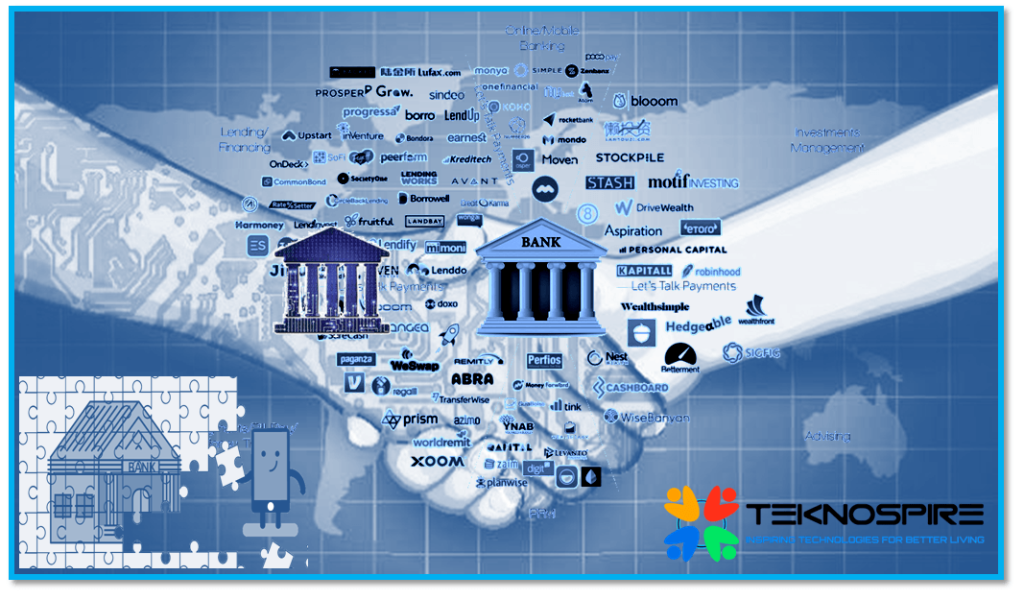
The financial services industry has entered 2018 with a focus on digitizing services to better meet customers’ needs. But do the banks understand that previously inefficient, paper-based processes and messy ‘not so friendly’ user interfaces are no longer going to be good enough in today’s technologically advanced environment? Banks are needed to connect digitally to succeed. With FinTech continuing to gain momentum, it’s just a matter of time, to see them fully integrated into business-as-usual banking. One of the world’s largest Deutsche bank calls for “a shift in mindset from one of competition to collaboration,” arguing that traditional banking providers and new innovators must work together in order to revolutionize the payments market and the wider financial sector for the benefit of all. They said it and I quote: “For both parties, a partnership should liberate them to focus on their core competencies and contribute these areas of expertise to the innovation process.” Fintech, no doubt, is the talk of the day amongst investors, financial service providers, entrepreneurs, and even big corporate houses. The phenomenal potential of creating innovative services and business model makes it disruptive in nature. Realizing the immense potential of the technology, “Banks” are looking to integrate with FinTech solutions. In short Bank+FinTech merger  is next on the cards in the coming years. Welcome to the Era of FinTech. FinTech Nudged All FinTech, the technological innovation in the financial arena, registered its birth as a back-end activity, and today is nudging everything across the globe. It has transformed, almost everything, in such a way that you are about to witness the impact of the “fourth industrial revolution”. More than anything, it has created its own “FinTech Ecosystem” by embracing  the following: Digital Payments Remittances Insurance Lending Financial and Wealth Management Retail Banking FinTech has impressed the Banking Sector and its customers, which is why the transformation in banking has touched a new height. The “2016 World Retail Banking Report” states that almost two-thirds of the retail banking customers across the world use FinTech products or services like cards & payments, loans, Investments, financial advice and mortgages. This is because of the UX standards they offer to their customers. 81% of the customers feel that FinTech offers faster services and extends a great experience. In addition, FinTech firms are fast catching up bank’s “niche parameter”- TRUST. The percent of customers who have complete or partial trust in FinTech firms is as high as 87.9% across the globe. FinTech-Globally Embraced Global acceptance of FinTech is evident from a recent comparative study by EY (formerly Ernst and Young) which reported FinTech adoption between 2015 and 2017 has increased across various countries like- Australia, France, Germany, China, and India. The figures indicate adoption of past (2015), present (2017), and future (as responded in the survey). The adoption of FinTech in these countries has climbed exponentially: Australia- From 13% in 2015             to       37% in 2017 France-     From 27% in 2015             to       40% in 2017 Germany- From 12% in 2015             to       35% in 2017 China –     From 69% in 2015             to       77% in 2017 India –       From 52% in 2015             to       80% in 2017 ‘Banking with FinTech’ attraction Like any other sector, Banks have started reacting to FinTech, and since 2015, FinTech Banks have started emerging. Banks and Financial inclusions have initiated startup programs to constitute FinTech companies. Across the globe, 43% banks created such startups. Another 20% set up VCs to fund FinTechs. There are obvious reasons behind banks being forced to or influenced by FinTechs. EY FinTech Adoption Index 2017 released in June 2017 indicates that the appetite of digitally active consumers has risen considerably, from just one in seven digitally active consumers in 2015 to one in three in 2017. The report also shows that in 2017, there are 84% consumers aware of the fintech facilities in comparison to just 62% in 2015. The same reports show that the fintech adoption rate is expected to reach an average of 52% globally from the current rate of 33% in 2017. Such growth in numbers could soon blur the boundaries between different financial services, laying down new standards for the industry during the process. To stay ahead of the curve, financial firms would benefit from the technical assistance from the fintech startups. Why FinTech Lures Banks Unlike traditional banking, FinTech reduces  structural cost and operational deficiencies. The communication between branches or P2P transactions happens in real-time environments. Real-time updates, proactive alerts and agile innovation are an integral part of an enhanced customer experience. When right technology is used, it can reduce the need for manpower and even the “Brick and Mortar” locations. FinTech provides simplicity of design and power of contextuality that consumers are increasingly expecting. Another customer expectation of ‘externally simple yet internally efficient’ service platform is forcing the banks to rethink their policy of ‘working alone in stumbling mode’ or ‘working and staying ‘in the game’ powerful mode. It also enhances  regulatory compliance and better service to customers. Fintech firms like Teknospire are delivering convenient and affordable services by providing sustainable solutions for digitization of financial ecosystem to market segments (unserved and underserved) by taking care of their need for microloans and grants to the last mile, that till today were thought as unprofitable zone for  banking organizations. User friendly, data focused seamless technology is bringing more personalized offerings. With the security aspect, well taken care of, with biometric advances, the virtual reality solutions are helping customers interact with the banks in innovative ways which were unheard of, with traditional banking. The fast and efficient products and services of FinTech have attracted Banks to offer P2B services. This is evident from the fact that many have started offering traditional in-bank services on mobile devices as well. This has helped them offer high levels of access to consumer, and hence, a better usability and User Experience (UX) standards. Advantages of the Alliance betweenFinTech and Banks With FinTech and Bank partnership, the ultimate

Open Source Software
FinTech Trends

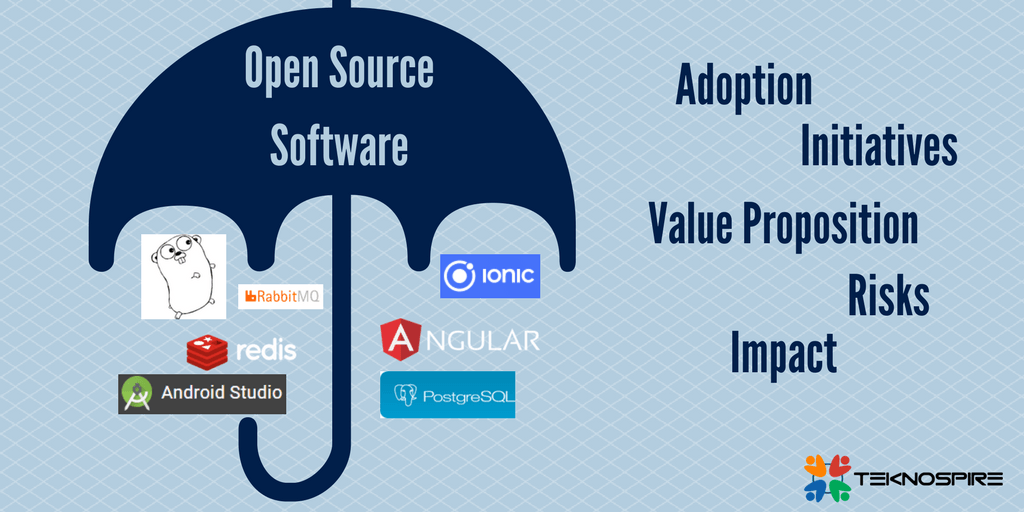
Open Source Software – Adoption, Initiatives, Value Proposition, Risks, Impact

Have you read the book written by Eric S. Raymond “The Cathedral and the Bazaar abbreviated as CatB” on software engineering methods?It’s an interesting piece where the author is differentiating between the two kinds of software development. One is the building a cathedral referred to the closed-source development that has central governance, software releases available only to subscribed/elite groups and comes with a price tag. On the other hand, an open-source development stated as Bazaar is freely available to all, developers and geek from across the world contribute and build a stable, coherent, and robust system. Being a CXO, Developer or a consumer which technique would you opt for? Let’s explore – What Is Open-Source Software [OSS]? Open Source Software [OSS] is a software that is offered along with source code, with the rights to users to read or modify it. As per techopedia -The OSS group agrees that software qualifies to be an Open Source Software when – The program is freely distributed The source code is inclusive Edit rights and permissions are granted to any user Redistribution of the amended version of source code is allowed OSS license must not interfere with the operation of any other software. How Much Open Source Do Firms Use? The old story of needing to understand if your organization uses open source has shifted to how and how much open source is in your applications* – Rod Cope, CTO of Rogue Wave Software As per a study titled “Future of Open Source” ~90 percent of firms agreed that Open Source offers room for innovation, enhance productivity and interoperability. As per the report more than 55 percent respondents have adopted open source software instead of a registered software for a production environment. While you thought OSS is the need of the hour for Enterprises and startups, you would be amazed to know that even government organizations are embracing Open Source Software. As per a report by Red Cope February 2017 – Bulgaria Leads the implementation with most of the software designed for government offices are open source and available in public repository. The report also highlights how the brand is now “open” to explore the idea of Open Source Software. Biggies like Microsoft and Walmart have come up with open source code policy to handshake with innovation. Why is Open Source Software a Value Proposition? OSS is supporting innovation initiatives, accelerating development time and providing a competitive edge to your organization but what VALUE does it bring to a firm/user? The VALUE of being OPEN Being transparent is the fundamental idea of an Open Source Software. While Closed source development does not allow its user to test, evaluate and analyze the software, Open source offers firms to access the code before putting money into it. The power of tweaking the code, customizing as per your requirement is like possessing the magical powers for a software developer. The VALUE of INNOVATION and INVENTION As per a survey report from 2016 Future Of Open Source, respondents mentioned that continuous use of Open Source Software helps in innovation. OSS with its features like quick Time to market, ease of agile development and interoperability helps in delivering quality software with no technical glitches. However, the USP of innovating with OSS comes because of its free usage and communities that help and grow. Just download the code and start playing with it, in case you encounter a glitch reach out to the community for help and get it resolved. Within communities individuals work on mutual consensus, there is no competition,and that is a significant key to invention. The VALUE of Being FLEXIBLE Open Source Software [OSS] offers freedom of choice. You need not sign up for per-user plan or yearly plan, with OSS the opportunity is limitless. With strong community support at the global level, the OSS standards improve each day,and you could expand your product portfolio for your client at no extra cost. Such opportunities may not exist with proprietary software’s. The VALUE of Being SCALABLE How frustrating it gets when a website crashes due to an increase in traffic? For any software, scalability is a parameter that indicates the health of the product/service with an increase in volume/size or features. In fact, the 2015 Future of Open Source survey stated, 58 % respondents believe open source affords the most excellent ability to scale. Which Sectors Are Most Impacted by Open Source? As per research published by Techcrunch in April 2017, there are three major sectors for which Open source software are widely available. They are IT Operations[LINUX, Tomcat etc] ,DevOps [ Git, Node.js etc] and Data and Analytics [ MySQL, Hadoop etc]. Another report from Infosys highlights the fact that – Cloud, Big data, Content management, databases, operating systems, development tools and mobile technologies are the major tech areas where OSS is successfully adopted. While the same report marks Linux as one of the largest OSS , with almost  94% of the world’s top 500 super-computers using it. Open source versioning system git is the overwhelming choice for versioning with 73%. Why Organization Should Use Open Source Software If you are an individual, enterprise, startup, MNC or government organization Open Source Software are splendid and certainly suit your requirement of software engineering. When a firm/individual adopts to OSS, they are freeing themselves from a costly vendor lock-in that helps in the long run. Backed up by a strong community of skilled techies, help is just a click away, it is not only easy on installation but integration with third parties and customization as per client needs. With a promise to deliver quality and reducing time to market it helps in building trust and drive innovation at a fast pace. What Are the Risks in Using Open-Source Software? Unlike any technology, OSS also has some risks associated with them. Here is a list of major challenges faced by individuals in using Open Source Software- Lack of Standards and Protocols No defined process for integration and customization A grey

Scroll to Top